Wednesday, 7 May 2008

Three factors ensuring success for local PCB manufacturer

St Ives, Cambridgeshire, is probably more familiar as a market town with a distinctive bridge and waterfront on the Great Ouse. Gennaro Coppolaro of Polar Communications had invited me there to do a business photo shoot at Anglia Circuits Limited, a printed circuit board (PCB) manufacturer located on one of the business parks of the town, as part of their current website construction. I discovered a fascinating and thriving business and identified the three factors that ensure it's continued success; finding a niche, setting high quality standards and good relationship marketing.

Background


Open up any of the key electronic components that we take for granted during our business and private lives, from mobile phones, Blackberrys to PCS, cars and calculators, and you will find a printed circuit board (PCB). The PCB is the board with all the electrical connections and tracks; the transistors, processors and other electronic components are all added at a later stage; imagine the PCB as a railway network and all the attachments as the stations, signalling and trains.

Because of their ubiquity, there is a major and highly competitive market nationally and worldwide for PCB manufacture. There are at least 97 manufacturers in the UK, the US has more than 3800 and there are 300 plus large multimillion PCB international businesses in a market expected to grow from $50bn in 2007 to $76bn in 2012. As with any manufacturing sector, Asia is becoming a major powerhouse in PCB manufacturing with a concomitant price pressure and a decline in US and European manufacturing. Surviving and even growing as a PCB manufacturer in the UK is therefore by no means a mean feat.

Looking at the actual methodology, it comes as a surprise to find that the concept of a printed circuit board was already apparent to Edison when he responded to the Sprague Electrical Company request on how to "draw" conductive traces on paper. Early methods were "additive", in that they suggested different ways of adding a circuit to a substrate. In 1913, Arthur Berry filed for a patent for etching away metal covered in a pattern of resistant material to leave defined tracts, forming the basis for so called "subtractive" methods. These evolved, invention by invention, until by the end of World War II in the UK, the founding father of modern PCBs, Paul Eisler, was electrodepositing copper foil on planar substrates and etching it away with ferric chloride to leave circuits .

By 1948, the US had released the technology for general application and the technology has expanded from there. Nowadays, PCB manufacturers can purchase boards with a surface bonded copper sheet layer, itself covered in a photoresist layer, ready for PCB production.

Initially all added components were fixed to PCBs by wires going through the board (Through-hole mounting), a method still used for larger components; with the 1960s came the surface mounting with soldering (Surface mount).

Even with innovations, this is a well established technology, with an apparently straightforward manufacturing process, that lends itself to mass production of low cost units. So how can a UK PCB company remain competitive?

Cue my visit to Anglia Circuits Limited, camera in hand, with a brief to photograph staff, to capture the key stages in the PCB work-flow at the company and to photograph examples from the wide range of PCBs produced to date.

The visit

After a warm welcome by Matthew Kember, Owner/Manager of Anglia Circuits Limited, and an introduction to the other team members, the staff photos came first. Whilst most people do not like their photos being taken, I was treated courteously and gained an impression of a friendly, positive, dedicated team and a well run company from the conversations I had. This impression was reinforced as I toured the company to photograph the key stages in PCB manufacturing at Anglia Circuits Limited and met more staff on the shop floor.

Factor 1. Targeting a niche market

Anglia Circuits Limited specialises in short production runs of tens to hundreds of PCB made to order for a clients specialist requirements. This distinguishes them on the one hand from the other specialists who make unique one off PCBs, which are used in prototype testing or R&D, and from the mass market that produces thousands to millions of a particular PCB design. This targeting of a niche market for short production run PCBs is the first factor contributing to the company's success.

Factor 2. Setting high quality standards

Quality control was a consistent theme when I began my photographic tour of Anglia Circuits Limited, (reproduced in a truncated version as a photo album at http://picasaweb.google.com/miltoncontact/PCBManufacturingAtAngliaCircuits to complement this article and as thumbnail links in this document). A very simplified description of the PCB production nevertheless gives a good impression of the checks at every stage.

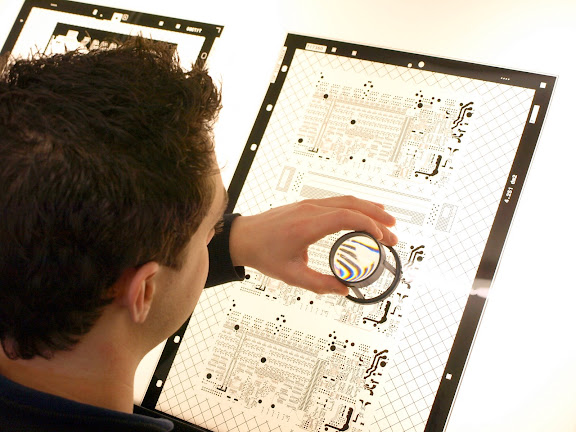
Circuit plans arrive from clients and are screened by resident expert before being printed as acetate masks (slide 02) for the photo-lithographic etching process. A completed PCB may consist of up to 14 separate layers of circuits fused in a completed board; each layer requires its own design. The acetates are then visually inspected (slide 03) before being passed on for alignment and mounting on the PCB/Copper/Photoresist blank board (slide 04). Once exposed, (slide 05), the unmasked resist is removed, exposing bare copper (slide 06) which is etched away to leave the remaining tracks under their layer of protective tin resist (slide 07). The tin layer is itself removed, revealing the copper circuits beneath (slide 08). At this point, each layer produced is checked by a sophisticated computer with image analysis software: Any highlighted potential defects are assessed by the human operator, who can remedy minor errors (slide 09).

The individual circuit layers are then accurately assembled by hand (slide 10) and heat bonded. The multi-layer PCB is precision drilled to permit through board mounting of future components (slide 11) and the holes themselves are carbon coated and plated to ensure electrical conduction where required between layers (slide 12). The drilled boards need to go through a final stage of photolithography to produce the surface circuits of the stack (repeat of slides 03 - 09).

The boards are sprayed with a protective coat that imparts the characteristic green (or any other) colour for a PCB (slide 13). Yet another photolithographic process is used to expose the solder points on the board (slide 14). These points are treated to impart the final silver or gold finish (slide 15).

The final stages are to print the text descriptions on the board (slides 16 and 17) and cut out the individual PCBs from the larger multi-unit panels (slide 18). The completed PCBs are then inspected manually for accuracy and surface defects (slide 19) before testing every individual circuit on each PCB using a state of the art EMMA flying probe (slide 20).

So you can see, even from this simplified description, that the continual quality control throughout manufacture ensures that the despatched product (slide 21) matches the client’s requirements by providing a high quality, tested and reliable PCBs.
Factor 3. Good relationship marketing

Matthew Kember told me that he'd asked clients what was important for them when considering Anglia Circuits Limited as a PCB supplier in a competitive market. He was surprised to hear that it was in part because the company was a family owned business established since 1968. (In fact, Anglia Circuits Limited claim to be the oldest, established PCB firm in the UK!) The company has acquired a reputation for quality, reliability and flexibility that ensured clients returned to provide more business. The positive atmosphere, ethos and practice existing within the organisation that I had noticed during my visit (and confirmed subsequently) had also been applied externally to foster good relations with clients.

The continued nurturing of clients and meeting their needs with a quality service has meant that 90% of the business derives from existing and established customers who return year after year.
Conclusion
By targeting a particular niche in the market for PCBs - low volume production, Anglia Circuits Limited is able to concentrate on the provision of a high quality controlled product to discerning clients who, through good relationship marketing, have formed a loyal client base providing 90% of the business. The result is that Anglia Circuits Limited was able to expand by 25% two years ago, acquire more state of the art equipment to complement and improve their existing production lines this year. They are considering another expansion phase in the near future; All this in a highly competitive and saturated World market.

You can contact Matthew Kember for more information about Anglia Circuits Limited and their PCB manufacturing on 01480 467770.

Author: Dr Chris Thomas, Director Milton Contact Limited
Creating effective communication in your team, your business or internationally, through interpersonal skills, text and images.

A PDF version of this document with 21 images is available at http://www.miltoncontact.com/news01/PCB-manufacturer.pdf

Friday, 15 February 2008

Suffolk eyes Life Science Opportunities

In the wake of the Sainsbury Review suggesting a greater regional activity in the UK’s life sciences sector, Dr. Carol Rowntree of St Edmundsbury Economic Development Services invited representatives of Suffolk local authorities and interested parties from Suffolk and Cambridge to attend a meeting hosted at Genzyme’s Haverhill plant on the 6th February, 2008. The aim was to give an introduction to Life Sciences in the East of England and learn more about a long standing and successful business in this sector.


The attendees were (alphabetical, not in order on photo!):
Dr. Belinda Clarke, ERBI (speaker)
Steve Clarke, Business Link
Emma Cooney, Forest Heath DC
Simon Cousins, VP and General Manager, Genzyme, Haverhill (Host & Speaker)
Dawn Easter, Mid Suffolk DC
Vimmi Hayes, SDA
Neil Henry, Babergh District Council
Andrea Mayley, St Edmundsbury BC
Gail McAndie, SCC
Hendrik Pavel, St John’s Innovation Centre
Kirsty Pitwood, St Edmundsbury BC
Jai Raithatha, SCC
Chris Rand, St Edmundsbury BC
Nicola Rogers, EEI
Carol Rowntree, St Edmundsbury BC
Louise Rushworth, GCP
Vijay Sundram, Ipswich BC
Dr. Chris Thomas, Milton Contact Ltd

Dr Belinda Clarke of ERBI gave an impressively jargon free presentation on the UK’s high 2nd place ranking in the world in terms of biotech companies, attracting 27% of Pharma investment and accounting for nearly a quarter of the worlds top medical devices. Pharma exports are valued at $21.3bn and the industry is a major employer. The East of England accounts for a significant proportion of this activity.

Whilst still very Cambridge centric, small companies are at the start of a progression from start-up venture-capital funded R&D in bio-incubators. They generate value products that end with their high profile acquisition by larger players in multimillion pound deals. Recent examples included CAT sold to Astra Zeneca for £702m and Domantis to GSK for £230m.

The recommended shift in regional investment is to support the four pillars of Life Sciences, Access to Finance, International Profile, Skills & Training, and partnering. This is to be achieved through an increased focus on science parks with a major emphasis on capital expenditure.

With the audience now appreciative of the importance of the Sector, Dr Simon Cousins, General Manager of the Genzyme plant at Haverhill, described the successful growth and investment at the site, which overlooks the town of Haverhill nestling in the valley below.

Genzyme has grown as an international company from its first beginnings 27 years ago by specialising in niche pharmaceutical production for high value (if low patient number) medical conditions. These ranged from Hyaluronic acid polymer sheets for bio-surgery, via diagnostics to the treatment of genetics ailments such as Gaucher’s Disease.

The Haverhill site was originally involved in chemical reagent manufacturing, until the parent company initiated a transformation into the company’s major distribution outlet and developed modern continuous flow manufacturing of Genzyme’s first flagship product Cerezyme. With a 25 year history at Haverhill, Genzyme, with its 300 plus staff, has build up good relations with the local community and authorities and benefits from close proximity to Stansted Airport.

The event culminated in a tour where Simon’s enthusiasm brought to life the tremendous achievements of reliable and consistent, high quality bulk pharmaceutical production in the absence of dangerous solvents. Modern plant design also ensured energy and resource recycling, relevant in these times of increasing environmental awareness and rising energy costs.

With the impressed delegates having a better basic understanding of the principles underlying the Life Sciences sector, the future challenge must surely be – how to ensure that Suffolk becomes bio-country.

Sunday, 20 January 2008

Promoting your business with text and images - Overview

As a Director or Marketing Manager of a small/medium sized business, you need to communicate with your existing and future customers. Text and images still form a significant part of the tool kit you will use.

My new e-book, "How small businesses can use text, images and design to promote their companies" will give you a practical overview of the key resources you can use. There will inevitably be omissions so your comments and input will also be valued.

The book is based on my practical experience as a company director, providing copy and design for clients and my own company.

I have also gained valuable insights and different perspectives through Networking and collaborating with others.

Our communication needs are summarised by the graphic below. There are four levels at which we can interact with our customers and peers.

Level 1 is the core of our businesses - our direct and immediate interaction with the existing and future clients.

The tools here start with our business card and website - the first most likely reference points people will find and check us out by. We maintain a recognisable brand or image via our correspondence, logo and product design.

Level 2 represents direct advertising through the media, leaflets, brochures, posters, viral marketing and exhibitions. Often this is done for new products or offers.

Level 3 is where we support the image of our company as a trusted expert, through articles, news, information and even books. Rather than bluntly advertising, the display and sharing of our knowledge creates a desire to want to work with us.

Level 4 are the smaller reminders of our companies existence; e.g. the company calendar, promotional pen or memory stick.

Future articles will expand both on the levels, the means and the toolkit!

You can subscribe to my e-mail distribution of new articles using the simple form at the bottom of my page at http://www.miltoncontact.com/art-photography.html

Tuesday, 27 November 2007

Visit by Zhuji City, China delegation to EEI

Zhuji City in Zhejiang Province ranks 24th in China's 6000 cities and it was therefore a privilege to join a visiting delegation from Zhuji at the East of England International offices in Cambridge.


top- Richard Wishart, Delivery Management, Robert Edge & Joan Zhou EEI

Situated 2.5h from Shanhei and Ningpo, Zhuji & Zhejiang are interested in expanding their business ventures abroad, building on current £2bn exports worldwide (£250m UK). With 6 companies listed on international Stock exchanges the region is pushing to add at least 15 more over the next five years.

Whilst the region may not be familiar to the man on the street, its products are, with 75% of freshwater pearls originating in the region. Current freshwater pearls are a leap in quality for jewellry, especially as in contrast to seawater pearls which are often seeded with a bead, freshwater pearls are pearl through and through! On a more prosaic but relevant note for the current cold winter weather, there is a 35% chance that you will be wearing socks produced in Zhejiang!

The main interest for the delegation was logistics - in particular accessibility via Britains ports. Robert Edge of EEI briefed the delegation at the meeting, facilitated by Joan Zhou also of EEI.

More photos on Milton Contact's Picasa Album site

With more than 50% of port traffic at Felixstowe coming from China and the concommittent increase in ship size, the port is planning expansion to the south for deep water container quays to secure its postion as one of Europe's major hubs. A current alternative with large warehousing capacity is the London Gateway Port.

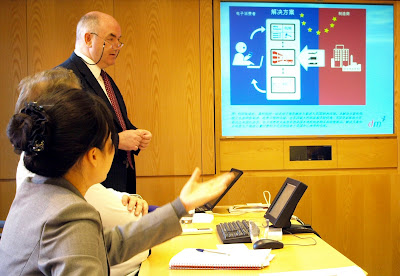
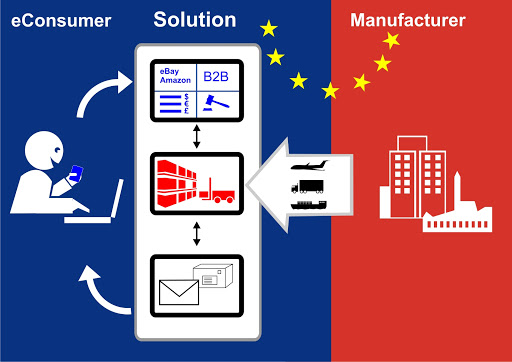
Collaborative networker and colleague Richard Wishart of Delivery Management delivered a practical introduction to his profitable one stop eCommerce solution for entry into European markets, presenting the visiting delegation with slides and white paper in Chinese text. Milton Contact limited was involved in the writing of the white paper (English text, Chinese text) and provided the key graphic for the document, shown below.


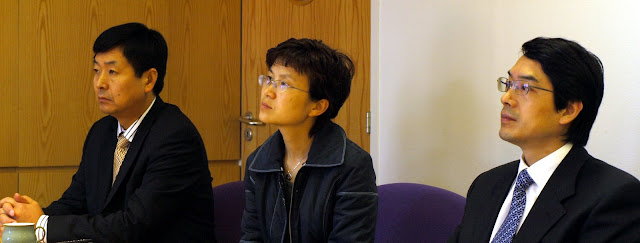
The Chinese delegation comprised He Xiaomin, Executive Vice Mayor Zhuji City Government; Qi Jianping, Chairman, Honglei Group Company Co.,Ltd, Xu Xingxi, Chairman Zhaoshan New Star Group; Wang Ling, Chairman, Zhejiang Meibang Textile Co.,Ltd; Huang Feigang, General Manger, Dadongnan Package Co.,Ltd, Zhejiang: Chen Jindi, Chairman Xiongfeng Group Co.,Ltd.; Lily Zhao Vice Managing Director Managing Director, Touchroad International Group; Chen Jianhong, Vice Director, Zhuji City Aboard Trade and Economic Cooperation; He Lijiong, Director Zhuji City State Taxuation Bureau.

Saturday, 10 November 2007

Photographs in Bourn St Helena & St Mary's Church


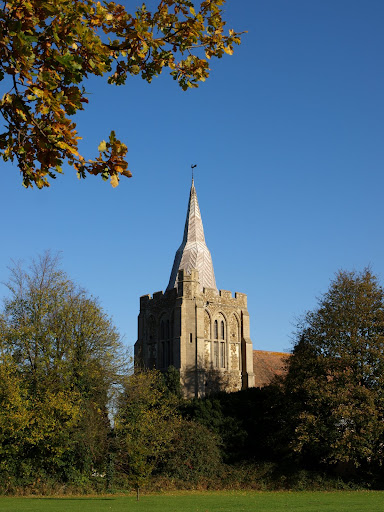
Having just attended a business breakfast talk by Professor Alan Barrell at Bourn Hall Clinic (see earlier blog), I was joined by Richard Wishart of Delivery Management and Mike Feinson of Mulberry House Consultancy as the Autumn sunlight shone on the twisted spire of Bourn's Church of St Helena and St Mary, luring us for a closer look.

We arrived to find the annual Christmas sale on in the Church and a friendly community who welcomed us in! Although an atheist, I love wandering around churches as they are the result of a communities original desires and activities which imbues each with its own atmosphere.

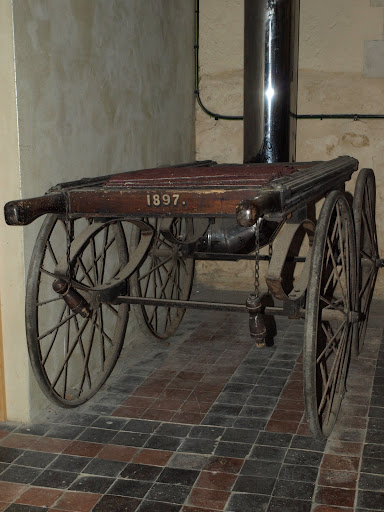
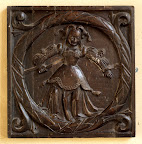
I was delighted by the 1897 beir parked in a hidden corner and we were intrigued by the meaning of a wooden panel, showing a wounded bound woman.


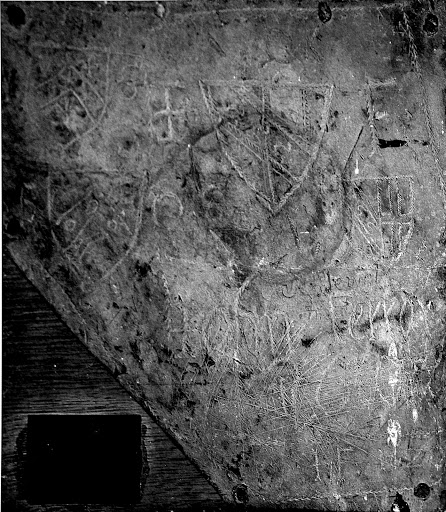
A lead panel on the purported to contain the arms of John Ferrar (1620) but it was difficult to see, so I photographed it with an oblique flash and subsequent editing revealed a whole set of arms and inscriptions.


We refreshed ourselves with tea and cake before setting off again to themore mundane realities of our work.

You can see a selection of photos in my St Helena & St Marys online album and more information on its history is available on the Bourn Village Website History page
Other online photographic church tours include Horningsea and Hohenkirchen

The Dragon, the Elephant and us


I arrived on a round about route at the Bourn Hall Clinic set deep in the heart of the Cambridgeshire coutryside, on a chill morning with a deep blue sky.

Around 20 Cambridgeshire businessmen and women and the local Members of Parliament, Andrew Lansley and Jim Paice, met in the sunlit boardroom of the Hall, set in a gentle landscape that had continuously occupied the site since the first wooden castle erected there in Norman times (http://www.bourn.org.uk/history.htm).


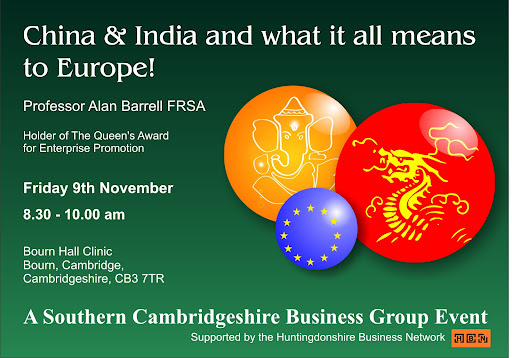
An excellent and welcome breakfast relaxed us sufficiently to enjoy the talk by Professor Alan Barrell, FRSA and Holder of the Queen’s award for Enterprise Promotion, on the rise of the Chinese Dragon and the Indian Elephant economies. We were reminded that here were two giants that had been slumbering for a past century and were now arising to take their place at the forefront of world economies.

European businesses might still view both mainly as manufacturing sources but these two nations were beginning to flex their R&D and innovation muscle; Highly vibrant, entrepreneurial and significant in their impact on the global economy, their dynamism sent out a wake-up call to the UK and EU – we need to adapt to the new realities or be sidelined.

The talk was entertaining and informative – with quotes from Napoleon to Ghandi – and he adapted to the audience which included Thak Patel of Think India and Joan Zhou of EEI.

Networking continued after the talk itself and you can see the best pictures in my album for the event “SCGB 091107 Bourn Clinic”.


The event was organised by Jan Mughan of the Southern Cambridgeshire Business Group with assistance from myself both as Huntingdonshire Business Network’s Mailing and Marketing Manager and through my international contacts list.

Chris re-elected as HBN's Mailing and Marketing Manager


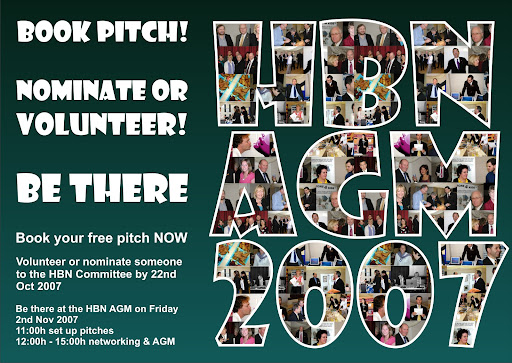
I was delighted to be elected onto the 2007/08 committee of the Huntingdonshire Business Network, as the Mailing and Marketing Manager. In the previous months since taking over from Steve Sheddon of Ivory Graphics, I'd been able to further develop professional mailings to members and a wider audience on the xciting seminars and events that we had had (you can see some of the graphics designed for this on the HBN-Events album.

Our members Photo competition for the HBN 2008 calendar resulted in over 100 pictures from which we now have to make a selction of the 14 to actually use!

We have a dynamic new committee and I'll be striving to ensure that we use 21st Century technology to keep members informed and spread the news on the friendliest business network in the area!

German NRW companies forge links with UK companies at the Interbuild

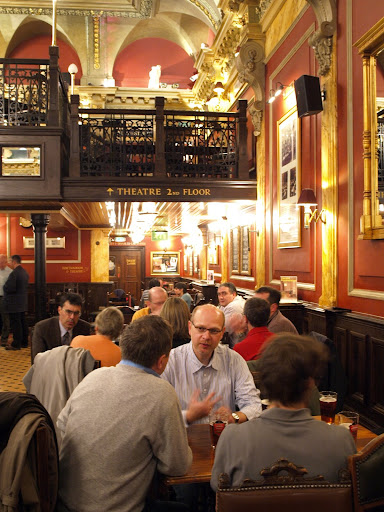
On a sunny October morning, nearly all the participants and organisers of the Association of Contractors of Duesseldorf, Mission to Birmingham met in a room immediately adjacent to the entrance to Hall 5 of the NEC Interbuild 2007. We’d come for the planned B2B meetings organised by Mark Dodsworth (Europartnerships) and his colleagues which included my company (Milton Contact Ltd), Sylvia Schmidt’s Come Across (Berlin) and Carolina’s Enlink.

We had spent the previous evening on a walk through the regenerated city centre by the canal and enjoyed a visit to two pubs for a relaxing get together.

It was great to link faces with the names from the brochure I’d designed for the event and voices over the phone, for whom we were arranging UK contacts.

Once the first UK meeting partners arrived, the day took off in a sequence of meetings, excursions and forays into the Interbuild itself. We were all flexible in adapting to those last minute changes in timings as some arrived early, some not at all and other arrived who we had not expected!

My personal role had been to support the company Künzel (Künzel Bauunternehmen GmbH & Co KG), specialising in trenchless technologies, for whom I’d arranged contacts. However, they came in a four man strong team with an English colleague and were fine on their own. Nevertheless, it was a pleasure to find out that they had hit a bulls eye with at least one of the UK partners I’d arranged for them.

I therefore teamed up with Thomas Willmes, Owner Manager of Bedachungstechnik Thomas Willmes GmbH, a company specialising in roof technologies. Our experience in the nuances and pertinent market areas to pursue increased from meeting to meeting so that we had a range of UK partners for him to pursue in the future. Our forays into the interbuild exhibition allowed us to gauge both the competition and establish which local suppliers of key components for any future work were already present in the UK.

In between, I snatched every opportunity to practice my photography as a record of the visit and you can find the best of the selection in the Album BGV NRW Mission to Birmingham.

Unfortunately, I had to leave at the end of the day to catch my train back to Cambridge and miss the opportunity for a final get together in a restaurant. However, I left with the abiding impression, that our colleagues from Germany had gained happy memories and practical information on the opportunities for their companies in the UK market!

Tuesday, 23 October 2007

Visit to the South Cambridgeshire Business Group

Today I visited Jan Mughan and Denise Smith of the South Cambridgeshire Business Group. They are a networking association which aim to keep businesses in touch with our MPs, Andrew Lansley and Jim Paice!

I had attended one of their breakfast meetings just after Gordon Brown had decided NOT to go to the country. We discussed issues with Andrew Lansley that had an impact on our businesses, from the perennial frustration with the A14, the success of manufacturing in Huntingdonshire and the effects of superbugs in our health system.

The thing that impressed me most was, that our MPs were willing to listen and discuss some of the issues that we as businessmen felt were having an impact on our being able to make South Cambridgeshire a more successful region.

The next breakfast that I hope to attend is on the 9th of November at Bourn Hall Clinic where Alan Barrell will be speaking on the hot topic of Business Deveopment in India and China and its effect on Business in Europe which is very pertinent to the international side of my business. Look forward to seeing you there!

Monday, 17 September 2007

The Reality of Funding in Cambridgeshire

Summary:
The Funding Fair 2007 provided useful information and contacts to organisations and individuals interested in funding their organisations and activities. This article will include a summary and useful links for both those in the arts and those working on social/community projects as well as a brief mention of people or organisations I talked to with both my artist and business networker hats on.
It was a glorious day, the tail end of summer, when I arrived in Cabourne for the funding fair on the business park! Fourteen funding agencies and three community groups had set up display stands and were actively talking to the visitors dropping in. Four seminars were also on offer and I attended the “Arts Project Funding” and “Sustainable Funding”.
Whilst the superficial message was bleak for arts funding from local and regional government agencies within Cambridgeshire (capital funding only and at a reduced budget), there was an underlying wealth of information and assistance available to the artist in our region. South Camrbidgeshire District Council Art Development Officer Andy O’Hanlon (tel: 01954 713343) has a friendly team with “start” (supporting arts development) and useful information on the SCDC site, if you know where to find it (http://www.scambs.gov.uk/LeisureandCulture/ArtsDevelopment/default.htm ).
Two very useful documents that I gathered were:
  1. the “Cambridgeshire’s Toolkit for the Arts” available at the bottom of the page from http://www.scambs.gov.uk/LeisureandCulture/ArtsDevelopment/localArts.htm; the page also introduces the arts development team!
  2. the “Funding Toolkit 2007 Update”, available at http://www.scambs.gov.uk/CommunityandLiving/CommunityDevelopment/ . Whilst this covers a broader range of funding sources than just the arts, it has an excellent five pages of Funder – mentals, hints and tips on how to plan applying for funding effectively
I also blessed the Arts Council table with my ignorance and learnt that again, whilst applications were considered from a whole breadth of arts, it was worth taking time preparing and gathering information to improve chances of success. Providing grants from £200 to £30000, their website is www.artscouncil.org.uk and has a regional section.
Funding for community and social activities was also feeling the financial squeeze, with many participants attending because they were looking for imminent renewal of funding for existing projects.
Two factors were affecting sustainable funding. Firstly, the trend in funding was towards the establishment of new projects. Second, the proportion of monies available from grants had declined to 38% with fee income solutions now making up the majority of sustainable funds. David Coulson of the Social Enterprise People introduced us to the concept of the structured market within the voluntary sector, where voluntary groups needed to educate and collaborate with the authorities to identify tasks and solutions the voluntary sector could fulfil on a contract basis. This required a longer term planning and looking to the future, patient work and networking – and no guarantee that the participants would actually gain the contracts arising!
Here again the Funder-mentals section of Funding Toolkit mentioned above will be invaluable to those aiming to be more successful in any bids for funding or contracts.
People and organisations I met included;
Bev Sedley of Lifecraft (www.lifecraft.org.uk), a Cambridge based mental health charity who is also an accapella singer and part of a local singing group.
Richard Taylor of Arts and Minds (www.artsandminds.org.uk), currently interested in storytelling and mental health.
Marie of the Peterborough Women’s Centre (www.peterboroughwomenscentre.org.uk) who aim to provide training and support for all women in an empowering environment.
Cambridgeshire Community Foundation (www.cambscf.org.uk) who manage funds and grants on behalf of patrons in this region.
Mondegreen EB (www.evolveeb.co.uk) who fund community projects within a 10 mile radius of landfill sites.
Overall the event was informative and useful and I would recommend anyone involved in funding to look out for the Funding Fair 2008!

Friday, 14 September 2007

New free online tools for small businesses

Collaborative networking is one way that small businesses can work loosely together to provide serives that are greater than the sum of their parts. I'm therefore always on the lookout for tools that can be of help.
Recently, I discovered Goggle's free document and spreadsheet facility. This goes one step further than the shared folders that can be used currently by Windows Live Messenger users in that two people can simultaneously work on a text document online and see the respective changes in real time.
People can be invited in as collaborators or simply as viewers - all that is needed is a free Google Account.
At the moment I'm using the facility to create, share and edit documents with two other companies, one in the UK and one abroad, on a joint project. The other advantage is that I can then access the documents from anywhere online if I wish to in a secure password protected manner.
Whilst the formatting settings are not as sophisticated as those of Word on my PC, I can create credible documents formatted online. If I need to prettify the final version, the document can be saved in a variety of standard formats for processing on my own machine.
If sharing documents with clients or colleagues is something that could benefit your company, give Google Documents and Spreadsheets a trial!

Saturday, 11 August 2007

Huntingdon Photographs

This Friday's trip to the Huntingdonshire Business Network was on a gloriously sunny day. Met up with Richard Wishart, Delivery Management for discussions over teas at Costa Coffee, with other HBNers dropping in for chats too.

At 3:30pm wandered around Huntingdon with camera, exploiting the fantastic lighting conditions. Caused consternation at the Market Inn when photographing the calligraphic sculptures there and ended up talking to two Stephen's on photography, pixel resolution, ccds and the benefits of film over digital. Then continued to river for more photos. Of the 60 or more pictures, 20 were OK for a web album . Of these only a few are noteworthy - which do you think?

Monday, 6 August 2007

Basic information and links on foot and mouth disease relevant to the current outbreak 2007-08-06

As curious as no doubt you are about the current Foot and Mouth epidemic, I spent an hour searching for information on the subject on the web (information research and summary is one of my activities) and thought, why not share the info!

Foot and mouth disease is a highly infectious virus borne disease of cloven hoofed animals including cows, goats, sheep, pigs and deer. A good summary of its properties, spread and impact can be found at http://www.vet.uga.edu/VPP/gray_book02/fad/fmd.php and also at the DEFRA site - http://www.defra.gov.uk/animalh/diseases/notifiable/fmd/index.htm

The Guardian has a nice computerised image of the virus and pictures of symptoms can be found on this google image search

Current information on the UK outbreak provided by DEFRA can be found at
http://www.defra.gov.uk/news/latest/2007/animal-0803.htm#0408

The Pirbright site (http://www.iah.bbsrc.ac.uk/info/labs.HTM#pirbright )of the Institute for Animal Health (http://www.iah.bbsrc.ac.uk/ ) is being checked in relation to the outbreak because the strain of foot and mouth virus found in the infected cattle is very similar to the one used for generating vaccines, 01 BFS67, which originally came from the 1967 outbreak in the UK.

A private company, Merial (http://www.merial.com/ ) active in animal health also has a presence on the site and was producing the same kind of virus strain a few weeks before the outbreak.

Foot and mouth virus has to be worked on under high containment – for animals it is a category 4 animal pathogen. Work on such viruses is most likely to be conducted in a category 4 laboratory for animal pathogens (http://www.defra.gov.uk/animalh/diseases/pathogens/category4.htm ) which has stringent controls. these include working under negative pressure, extensive filtration of air leaving the laboratory and full treatment of waste before it even leaves a lab.

Sources quoted here indicate that most infection is by close proximity to existing infected animals, however, Foot and mouth disease virus can be spread through the air but this requires a high count of virus particles to cause infection - this has been the focus of scientific research. One accessible paper on the internet is by A.I. Donaldson & S. Alexandersen (2002 http://bvs.panaftosa.org.br/textoc/DonaldsonPredicting2002.pdf ).

They quote that 100 infected cattle could produce a plume of virus which would infect other cattle at up to 1km overland. Where large numbers of animals are producing airborne virus such as in the middle of large epidemic as in the 1967 outbreak, the distances can be from 6 to 90km.

By the end of today (06/08/07) waterborne virus transmission was also being considered due to flooding in the area of the infected farm. As all effluent from Category 4 laboratories has to be treated before release, the theory requires a significant breakdown in biosecurity caused by flooding.

The third route of virus escape and transmission would be by human error - inadequate cleaning, clothes changing etc of an individual working at either of the establishments and that individual somehow coming into contact with the cattle several miles away.


Note that the existing control measures being implemented aim to catch the disease very early before spread by proximity occurs or sufficient sick animals develop symptoms and shed quantities of virus that could spread and be infectious by air (http://www.defra.gov.uk/animalh/diseases/fmd/about/qanda.htm#16 ). Culling and incineration destroy source and virus effectively.

What about vaccination? It is an option being considered. Note that apparently vaccination is effective for only a few months and that vaccinated animals that are not completely protected could still be a source of the virus without showing symptoms (see vaccination section at http://www.vet.uga.edu/VPP/gray_book02/fad/fmd.php )

This information has been derived from publicly accessible material as a short exercise to demonstrate my capabilities and is for information only. If you need to check the accuracy of the information – please contact the sources – Defra is a good place to start.

With such a serious issue of national significance please understand that I cannot take responsibility for actions based on the information that I have given here, again - go to the relevant authority in your country for best guidance and practice.

Wednesday, 25 July 2007

Bookplates, Archival papers, inks and adhesives

In our ephemeral everchanging world of the present, it comes as a pleasant surprise and challenge when you have to consider your work lasting for at least the next 80 years. This was the challenge when asked to produce bookplates for a client donating his scholarly collection to a college library.

The most obvious element is the paper - it has to be acid free to prevent browning and decay with age. Interestingly, most modern papers are much less acidic that in the past (Wikipedia article), however, for archival purposes, it is still best to use materials adopting the archival standard ISO9706. I set out enquiries with two potential printers of which one passed me on to the excellent support team of Xerox who recommended their Colotech+ paper that met the standard.

Digital printing is now common and very economic, would the colour toner also meet the requirements in terms of not damaging the book and and lightfastness? The message came back "Tests have shown that EA Toner is light fast for 15 years indoors with 10 hours light exposure per day. It's light that makes the toner degrade, so keeping the colour plates closed in a book and viewed once in a while for a few minutes should mean that 80 years is OK." Using EA toner (which the DC250 uses), along with Xerox colotech would conform to ISO9706.

Colotech+ did come in a selfadhesive form, however, I had requested that reversibility of adhesion would be desireable in case there was a need for conservation in the future and that could not be met. The bookplates therefore needed to be glued with a reversible archival adhesive.

The recommendation from Harvard was for very dilute methyl cellulose, from the Australian Museums and Galleries online for the starch pastes used for centuries with known consequences. Some establishments did use dilute PVA but there appeared to be concerns about the potential brittleness of the adhesive and its impact on delicate papers.

For me, starch paste would appear to be the obvious choice!

Now I only need to wait another 80 years or so to see if the advice that I received and have passed on is accurate!

Sunday, 8 July 2007

Seminar Writing for Promotional Purposes

Fridays educational theme continued with an HBN Seminar by Jon Beal of Netflare on Writing for Promotional purposes.

In the past Jon had directed me to Paul Gorman's book with an incredibly long title, which also dealt with this subject. i was therefore familiar and regularly use the 7 point strategy for writing copy:
  • Headline
  • Promise
  • Benefits
  • Proof
  • Consequences
  • Sumary
  • Call to action
The new gem that Jon gave us was a structured way for preparing to write good copy by identifying our customers and what products and services we were offering. This was done by identifying your customer type, their relationwhip with you/your product and the qualities that they would be looking for. By considering the possible scenarious and asking yourself pertinent questions, you could come up with responses that were of immediate use to your copywriting!

Telesales Tips from VELC Seminar

Friday began at an ungodly hour for me, at a breakfast meeting organised by Jo Morgans's Very Early Lunch Club. I'd been attracted to this meeting by Sureya Landini's short talk on Telesales. The key messages that I came away with were 1. that your attitude and posture when phoning are transmitted in your voice when you call and can have a real positive impact on your success and 2. that it is better to listen than talk!

Interestingly, there was an article in this weeks New Scientist "Why we are all Creatures of Habit" which included mention of studies that demonstrated that a persons success in a business or other transaction was less dependent on what they actually said, but on how they said it and their overall body language and could be accurately prediced within a matter of seconds. the broader tone of the article sparks a debate on whether we are actually creatures of habit and instinctive reactions and therefore extremely predicatable!

Monday, 2 July 2007

Peter Brooks Nimrod Launch at Landbeach

Milton Contact had invited the residents of Landbeach to attend Peter Newman's book Launch of Nimrod - A Memoir of Mishief and Mishap on Peter's behalf for last Friday. Peter had booked the Village hall, arranged food and drinks for what he saw as a celebration for the Landbeach community, of which Nimrod, the cat in tale, had also been a part of.

Over 40 guests attended to hear Peter read extracts from his book and then hand over a special copy to his Grandson Richard to whom it was dedicated.

Whilst the party then got into full swing with guests enjoying the wine and Grace's (Peters Wife) excellend finger buffet, Peter and I were busy with the book sales and signing.

The evening was a tremendous success for Peter, with copies of the book going like hot cakes!

Some guests were already through several chapters of the book during the evening and I'm looking forward to some positive reviews in the near future that can be posted on the web.

Thursday, 28 June 2007

Speedwalking into business

Tony Blair had just left office and Brown was facing being the new Prime Minister as I arrived for a Boardroom Lunch at the invitation of UHY George Hay in Huntingdon. It was an eclectic mix of UHY Partners, clients and others brought together for a pleasant form of networking between businesses that might not otherwise have met.

Neil Parker was from the Greenwich Observatory Ltd, a company specialising in optical equipment from Telescopes to my particular interest, microscopes. pre lunch conversation swirled about the visibility of Venus by day to the glare of city night lights drowning out the stars.

Over the main course, Ken Barber of Capita Solutions Ltd and I swapped stories about the pleasure of meeting different businesses and learning the variety of mostivations that people have for running their own business. his company deals in financial solutions for companies unable to obtain funding from other sources and could prove useful for some of my overseas contacts should they wish to enter the UK market.

During the dessert course my quiet neighbour to the left, Peter Howard of Rayzel International Properties Ltd, revealed himself to be an ardent speedwalker and I learnt that the hip and bottom wiggling technique was passe and that a key requirement of the technique was to straighten the advancing knee before the foot touched the ground.

I had to leave early to meet with another future client, behind me a room still buzzing with conversation.

Thursday, 21 June 2007

Opportunities for startups and disadvantaged communities

Thinking of starting up in business? There is a new kid on the block with assistance and training as I found out today, attending the NWES launch of CREAM (Cambridge & Rural Enterprise Advice and Mentoring). NWES, with its roots in Norfolk, has taken over Enterprise Fenland to become one of the UK's largest enterprise agencies. NWES provides assistance and loans to new companies and is particularly supportive of disadvantaged, ethnic and minority groupings.

With the restructuring of Business Link to provide information, diagnioses and brokerage within the East of England rather than providing training and similar services as in the past, the launch of CREAM is timely in its provision of free business support and training to startups. This will be delivered over a four year with free training courses being available from July onwards at a reange of locations in Cambridgeshire. Interested parties can find out more by phoning 01354 660900 or e-mailing info@nwes.org.uk.

I would not even have been aware of the launch, had Andrew Wilson, Head of NWES Support not contacted me. Furthermore, as a potential business user or referrer, it is hard to keep up with the current changes in business support, agencies and training provision in this area, by agencies that might often feel themselves in competition with each other. Existing businesses and networks like the Chambers of Commerce and HBN could also play a valuable role. Perhaps the GCP could emulate their provision of centralised contact/information for international visitors by providing an overview or common information point on their website on the diversity of business support services/agencies.

CREAM looks like an excellent idea and I hope that it reaches its intended clients.

Wednesday, 20 June 2007

Goodwill and the Value of your business

I learnt a new word today as Barry Jefferd of UHY George Hay gave an entertaining talk at the Premier HBN Event, held this evening at the Huntingdon Race Course: Goodwill.

Barry was talking about valuing your business if you had the intention of selling. Whilst able to dispell the myth that accountants could not be amusing and excellent speakers, the general tenet of valuation still resided with the numerical elements of assets, turnover, profits and shares; value was in part dependent on the integrity of the accounting practices with which the business was run. We were getting into less tangible areas when considering how the business was managed. If it could run without you, value might increase, if it could not run in your absence, value would be likely to be diminished.

Whe all the financial and managerial factors have been considered and there are no hidden skeletons in the cupboard, that is where goodwill enters the balance sheet. Not just any goodwill, for goodwill is a real accounting term, it has to be purchased goodwill; it is the surplus over the fair value of the net assets which someone is prepared to pay for the business.

Goodwill is an intangible asset, a fickle thing, influenced by factors from business contacts, location to business potential. It can be high at one evaluation of the company and diminish to nothing if the reputation of a company becomes tarnished.

Ultimately the value of goodwill and the value are dependent on one final factor, the presence of a willing buyer.
Google