Wednesday, 23 November 2011
Walk from Moorgate to Holborn, via The Armourers Hall, St Pauls demo and St Laurence Jewry
I visited London today, primarily to attend an OMFIF talk on the future of the International Financial System. The talk was held in the Armourers Hall where I also spent some time photographing the interior details that interested me.
After the meeting, I thought I would walk to Holborn to catch the Piccadilly line back to Kings Cross.I love the way that, especially in the City, old buildings and new are juxtaposed or integrated, so photographed a few on the way.
The route went through the Ward of Cheap, which seemed amusing after attending a finance meeting. However, the real old meaning of Cheap was Market. Cheap is one of the 25 wards in the City of London, each electing an Alderman, to the Court of Aldermen and Commoners (the City equivalent of a Councillor) to the Court of Common Council of the City of London Corporation.
The area is also rife with halls of the different livery companies.
A major stop was the church of St Lawrence Jewry where I photographed some of the modern stained glass.
I then diverted to St Pauls Cathedral as the last news had been that the protester's tent city that I had seen a couple of weeks back was to be cleared. However, when I arrived, the protest was still very visibly present! Asking a couple of bobbies, I learnt that the matter was back in the courts.
From there on it was a straight line walk to Holborn, taking one or two further pictures.
The route is roughly given here:
View Larger Map
This is one of four articles relating to a visit to London on 23rd November 2011:


Stained glass in the cloisters of Worcester Cathedral
Travelling back from Hereford on a dreary, wet Monday, I stopped off at Worcester and went to visit the Cathedral for the first time. With only a couple of hours and my small pocket camera, I liked the story in stained glass all around the cloisters.
The cloister windows on three (and a bit) sides, facing the herb garden, give the story of the English church through the ages, from Saxon times to the end of the 19th Century. Then there was a major new work, the Window of the Millenium, by the artist Mark Cazalet. This was an etched window and was easier to view from the Herb garden.
Photographically, the lighting was very poor due to the grey winter weather. Exposure times ranged from 1/8 to 1/25, averaging at 1/15, a challenge for me, trying to find support, and for the anti-shake function.
I've uploaded the pictures at full size (10Mpx) to the Picasa album so that you can zoom in to see the detail - follow the link from the slideshow above.
Worcester Cathedral is now definitely in my books for a return visit - with a tripod and the SLR - on a better day!
Sunday, 20 November 2011
Making your own video: 10 points I found useful
Returning from a networking meeting, I wanted to make a quick video. You can see the result below. What I found was that “quick” took a bit longer than I had blithely assumed – about an hours work for the 1 minute video. Here are the ten steps for successfully making a simple video yourself.
1. Planning your story
No matter how long or short, how impromptu or meticulously thought through, you need to plan the story your video is going to tell. This affects all other nine following points. If you are going to be the one recorded, plan it out briefly in paper.
Rehearse your story repeatedly, in your mind or out loud– it is amazing how blank your mind goes in front of a camera! Preparation helps
My planning was:
Key message: I should have included video in my networking introduction (subtitle: video is something that I can and do do on other occasions)
Overall story is reaction to a networking meeting I had just attended
Many cameras can now also record video at HD quality (720px or even 1080px wide), so this is less of an issue for first experiments. I recommend having a play with what you have at hand first. Then, if you want to make more demanding videos, you will have a better idea of what to look for in a more dedicated device.
My decision was actually made for me in that the resolution of my pocket camera's video is too low (320px), the battery on my hand held video-camera had run out - that only left the HD video-cam on the desktop!
3. Lighting
To give a good picture, a video camera needs lots of light, more so than a stills camera. Lighting also impacts on the appearance of you or your subject. Ironically bright sunlight on a face causes a lot of glare; if your subject has its back to the sun then it is likely to be in deep shade relative to a brightly lit background. So a bright day with your subject out of the direct sun and a not too brightly lit background is preferable.
I was fortunate in that there is a window high up behind my PC which let in enough light on my face for filming.
4. Microphone
I learnt very early on that the microphone and how it is used is critical for a video. Primarily, because it not only picks up the sound you want but all other background noise. Outside recordings really suffer from this. So, the closer you can get to your microphone to the sound you want to record the better. Even in a radio studio for example, I found the mike literally thrust right into my face during interviews. This means that the near sounds drown out those further away.
So if you can, have a separate microphone that either plugs into your video-camera or records sound independently so you can add it to the video later.
In this instance I used the video-cam microphone about a meter from me. A good sound system will pick out the noise of a loudly ticking clock and the fans of the computer in the video above.
5. Location
Because video is visual, where you film is important, even if it is a backdrop. Make sure that it is a relevant location to your film. My intention had been to record either as I was walking or standing in the nearby country park on the way back from the meeting I talk about.
The rationale was that if I recorded whilst taking the path through the village, I would have had noisy traffic drowning out my voice and anyway, the country park gave a pleasanter environment.
Not having a camera with me and then finding that the two outdoor cameras were unavailable put paid to that idea.
I therefore settled for an office recording.
6. Background
Once you have a generally suitable location in terms of atmosphere and low noise background, look at what is in the background of any scene you are going to record. I've used a Railway crossing, the River Cam, picturesque St Ives from the river to deliberately set up a particular atmosphere.
Try recording a few short clips of your scene before deciding on a final location and background and you will soon see how dramatically you can influence the look of your video. If you can control the background, say with a screen, by choosing a neutral wall etc., great!
Whilst my office background is OK when having a friendly Skype conversation, it is too distracting (code for untidy). I therefore used a large sheet of white paper to create a neutral background.
7. Recording
Once everything is in place, hit the record button and do a trial. If you are happy, go on to record the actual video, bearing the following things in mind.
Make sure there is a spare second on the video before the action starts and again that there is a bit of extra recording beyond the end of your story. This helps later with editing. Remember to save the clips in a format that your video editor (see editing below) can open,
Make several takes of the same video. I think I made 5 recordings before I had the one that I wanted.
For longer films, split the recording into several shorter recorded scenes. It makes life much easier as some parts of a story just seem to fall into place whilst others seem to need more work. By having several scenes, you can do work in stages. These are then stitched together later.
8. Editing
Basic video editors are available for free, with Windows Movie Maker being a good example. They allow you to upload your raw video recordings and tidy them up. You can determine where the real start and end of a video is. If you recorded several scenes, you can arrange them together the way you want. You can also add additional titles, effects and sounds.
This is where you turn your raw video into a proper little film.
Save your final video in a format that is acceptable for whatever video service you want to use.
9. Publishing
Most people set up an account with YouTube and upload their videos there, I do. It is an easy way to start and share.
To do this you need:
The uploaded video is then processed further by YouTube. This again takes time. Be patient.
My short video uploaded in about 2 minutes and took a further 2 minutes to process by YouTube. With previous 10 minute videos it took up to an hour to upload and the same amount of time again to process by YouTube before it was live.
10. Publicising
Once your video is up on the web, copy the link to it and send it to all who you think might be interested. I used Twitter and e-mail to let people know about mine.
One of the most fascinating things is which of your videos generate traffic and which do not. For example, my English video “Five Memorable Key Steps to Ensure a Good Presentation” has 8000+ hits, yet the German version "Fünf Tipps zur Perfekten Rede" has now gone over 12000!
Conclusion
You can make your own videos quite simply. Using the ten points above, you can ensure that you make a video that you are happy with, whether it is a video-blog report on the fly or a finely crafted film production!
Go out and make a video!
1. Planning your story
No matter how long or short, how impromptu or meticulously thought through, you need to plan the story your video is going to tell. This affects all other nine following points. If you are going to be the one recorded, plan it out briefly in paper.
Rehearse your story repeatedly, in your mind or out loud– it is amazing how blank your mind goes in front of a camera! Preparation helps
My planning was:
Key message: I should have included video in my networking introduction (subtitle: video is something that I can and do do on other occasions)
Overall story is reaction to a networking meeting I had just attended
- Mention host
- Mention location
- Sunrise
- Conversations – business, tattoos, fish, book, glass ceiling
- Key point – being made aware that I should include video in my communication
- Thanks for the insight
- End
Many cameras can now also record video at HD quality (720px or even 1080px wide), so this is less of an issue for first experiments. I recommend having a play with what you have at hand first. Then, if you want to make more demanding videos, you will have a better idea of what to look for in a more dedicated device.
My decision was actually made for me in that the resolution of my pocket camera's video is too low (320px), the battery on my hand held video-camera had run out - that only left the HD video-cam on the desktop!
3. Lighting
To give a good picture, a video camera needs lots of light, more so than a stills camera. Lighting also impacts on the appearance of you or your subject. Ironically bright sunlight on a face causes a lot of glare; if your subject has its back to the sun then it is likely to be in deep shade relative to a brightly lit background. So a bright day with your subject out of the direct sun and a not too brightly lit background is preferable.
I was fortunate in that there is a window high up behind my PC which let in enough light on my face for filming.
4. Microphone
I learnt very early on that the microphone and how it is used is critical for a video. Primarily, because it not only picks up the sound you want but all other background noise. Outside recordings really suffer from this. So, the closer you can get to your microphone to the sound you want to record the better. Even in a radio studio for example, I found the mike literally thrust right into my face during interviews. This means that the near sounds drown out those further away.
So if you can, have a separate microphone that either plugs into your video-camera or records sound independently so you can add it to the video later.
In this instance I used the video-cam microphone about a meter from me. A good sound system will pick out the noise of a loudly ticking clock and the fans of the computer in the video above.
5. Location
Because video is visual, where you film is important, even if it is a backdrop. Make sure that it is a relevant location to your film. My intention had been to record either as I was walking or standing in the nearby country park on the way back from the meeting I talk about.
The rationale was that if I recorded whilst taking the path through the village, I would have had noisy traffic drowning out my voice and anyway, the country park gave a pleasanter environment.
Not having a camera with me and then finding that the two outdoor cameras were unavailable put paid to that idea.
I therefore settled for an office recording.
6. Background
Once you have a generally suitable location in terms of atmosphere and low noise background, look at what is in the background of any scene you are going to record. I've used a Railway crossing, the River Cam, picturesque St Ives from the river to deliberately set up a particular atmosphere.
Try recording a few short clips of your scene before deciding on a final location and background and you will soon see how dramatically you can influence the look of your video. If you can control the background, say with a screen, by choosing a neutral wall etc., great!
Whilst my office background is OK when having a friendly Skype conversation, it is too distracting (code for untidy). I therefore used a large sheet of white paper to create a neutral background.
7. Recording
Once everything is in place, hit the record button and do a trial. If you are happy, go on to record the actual video, bearing the following things in mind.
Make sure there is a spare second on the video before the action starts and again that there is a bit of extra recording beyond the end of your story. This helps later with editing. Remember to save the clips in a format that your video editor (see editing below) can open,
Make several takes of the same video. I think I made 5 recordings before I had the one that I wanted.
For longer films, split the recording into several shorter recorded scenes. It makes life much easier as some parts of a story just seem to fall into place whilst others seem to need more work. By having several scenes, you can do work in stages. These are then stitched together later.
8. Editing
Basic video editors are available for free, with Windows Movie Maker being a good example. They allow you to upload your raw video recordings and tidy them up. You can determine where the real start and end of a video is. If you recorded several scenes, you can arrange them together the way you want. You can also add additional titles, effects and sounds.
This is where you turn your raw video into a proper little film.
Save your final video in a format that is acceptable for whatever video service you want to use.
9. Publishing
Most people set up an account with YouTube and upload their videos there, I do. It is an easy way to start and share.
To do this you need:
- Your video file in a format accepted by YouTube -see http://goo.gl/iZqvf
- A reasonably fast internet connection
- A YouTube account (go to http://www.youtube.com)
- Time – video files are large and take a while to upload, depending on how large they are and how fast your connection is.
- Relevant information about your video, its title and how you would describe and categorise it.
The uploaded video is then processed further by YouTube. This again takes time. Be patient.
My short video uploaded in about 2 minutes and took a further 2 minutes to process by YouTube. With previous 10 minute videos it took up to an hour to upload and the same amount of time again to process by YouTube before it was live.
10. Publicising
Once your video is up on the web, copy the link to it and send it to all who you think might be interested. I used Twitter and e-mail to let people know about mine.
One of the most fascinating things is which of your videos generate traffic and which do not. For example, my English video “Five Memorable Key Steps to Ensure a Good Presentation” has 8000+ hits, yet the German version "Fünf Tipps zur Perfekten Rede" has now gone over 12000!
Conclusion
You can make your own videos quite simply. Using the ten points above, you can ensure that you make a video that you are happy with, whether it is a video-blog report on the fly or a finely crafted film production!
Go out and make a video!
Wednesday, 16 November 2011
How to Make Britain a more successful exporter. Part B.
 |
| From Wordle-images |
This is the second of two articles prompted by Prime Minister David Cameron's LinkedIn request for business input - on how Britain could become more successful at exporting (Part A here)
Part B. Encourage small businesses to partner and provide a more comprehensive service
A very effective route, especially for SMEs or microbusinesses, is to work in partnership on projects.
If you wish to enter an overseas market with a particular product, look for partners who have products or services that, together with yours, enhance the offer you can provide.
Example 1. Overseas assistance:
I provide assistance for overseas companies wishing to find contacts and markets in the UK. My company's (Milton Contact Ltd) strengths are communication - helping companies adapt their product information, accompanying on visits and acting as a Peer to Peer advisor on their behalf.
I partner with another business (Europartnerships) that has long established contacts abroad and is effective at the project proposal and business generation side in a range of countries. In turn, together we co-opt partners who can help with: client acquisition in the overseas location; Market research; Finding contacts; Arranging appointments for our clients.
By working together, we provide a breadth of service and skills that can tackle larger projects. Being modular also means that we can be as small or large as we wish.
Example 2. Web based English language tutoring site for professionals
I'm currently part of a UK collaboration that includes a web designer and Legal English Language Experts - aiming to launch an internet based language tutoring site for international business people in 2012.
Examples 3. German businesses coming to UK
My clients are adopting this strategy too - see previous reports:
Entering a new market requires persistence
Historic buildings and future-proofing the skills to restore them: DE and GB experts meet in London
Collaboration between SMEs or microbusinesses - a strong tool to enable a larger, sound business presence internationally.
How to Make Britain a more successful exporter. Part A.
 |
| From World Economies Infographics |
"How do you think Britain could become more successful at exporting? And if you do export, let’s hear your success stories."
These were the relevant questions posed by the Prime Minister David Cameron on LinkedIn, following last week's joint UK Trade and Industry/Department for Business Innovation and Skills conference on 'Exporting for Growth.
And with good reason, as he went on to explain "We know that exporting is good for the economy. Sixty per cent of the UK’s productivity growth is due to companies who export and those that do are eleven per cent more productive."
The Prime minister expressed an interest in hearing businesses' views and during his speech, he announced a business growth package to help Britain’s small and medium sized enterprises create jobs, export to new markets, secure finance and cut red tape.
Naturally, I thought about the issue and came up with two distinct answers, based on my experience.
A. Making it easier for small businesses to even think about exporting and
B. Encourage small businesses to partner and provide a more comprehensive service.
Point A is expanded further below.
Point B is tackled in "How to Make Britain a more successful exporter. Part B."
A. Making it much easier for small and micro-businesses to even think about exporting.
Here my two recommendations:
1. Mail the following basic information. As a single sheet.
a) Infographic on the potential markets out there for UK markets to tackle.
b) Bullet point signposting on entering new markets abroad
c) Basic information on the costs and financial assistance available
2. Follow up with well publicised country/tradeshow visits.
Actively target companies in chosen sectors, do not wait for them to come to you.
Rationale:
For example, here is information on UKTI support and costs/subsidies that actually took quite a while to compile
- Export Market Research scheme - up to 50% support for agreed costs
- Export Communication Review £350 subsidy towards £500 cost for first review
- Overseas Marketing Info Service - from as little as £225 to £2000, depending on your requirements
- Tradeshow Access Program for SMEs - From £1000 to £1800 assistance
- Free Political and Economic Updates.
The next step for those who are prompted by the initial short message: They may then be ready for the UKTI document "Your Export Opportunity - Our insight" (http://www.ukti.gov.uk/uktihome/aboutukti/item/217820.html). It is positive and generally informative.
It is only then that the UKTI website with its wealth of detailed information and services available for the future exporter becomes relevant. By this time the interested party has hopefully the incentive to take valuable business time to dig for more information.
Making it very easy for businesses to make a taster trip to an exhibition abroad would also be of great benefit. There is nothing like physical presence at an event for meeting people and being open to new ideas and opportunities.
I am a UK provider of projects, market research, contacts and appointments for overseas companies entering the UK. There is a real push by countries such as Germany to enter markets in the EU and abroad and I've accompanied four or five delegations on the past year, often comprised of micro- businesses.
Whilst only a small proportion of companies then follow through and persist, it is a numbers game. The more that try, the more that will become active exporters. See how Germany has maintained its growth.
Where are tomorrows markets? See my infographic here based on IMF projections for 2010-2016 http://goo.gl/pBTP9
Monday, 14 November 2011
From Science to Fashion: A former colleague talks about her ethical fashion business Samamba
I'm just chatting to Denise Elliott, who was a colleague and excellent assistant when we were both in Biotech and before we escaped into running our own businesses.
Denise is running an ethical fashion business called Samamba based in Cambridge. She is active at most of the major festivals and of course, with Christmas coming up, will be at the Christmas Markets, for example Netherhall Shopping Nights on Friday the 18th and Bury St Edmunds on the 25th - 27th November.
Denise began Samamba with handmade jewellery, using natural materials such as semi precious stones, freshwater pearls, mother of pearl, glass, seeds and wood, for example. This is still is the mainstay of her business. Clothes and accessories then also entered her portfolio.
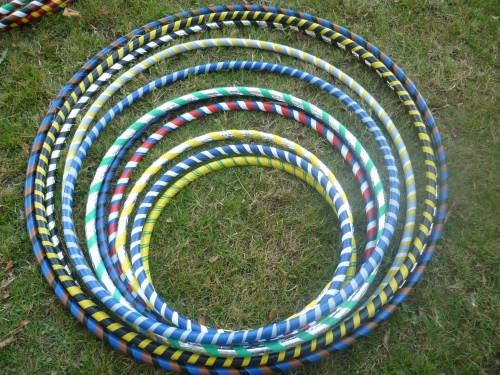
However, the amazing new item is Hula Hoops - which she makes tailor-made for customers. So whether you are a petite child or have a fun maturer figure - Denise can make a hula hoop for you. Apparently, it is not only great exercise - but warms you up. Hula Hoops have been a real hit for Denise at the festivals wherever she gives workshops.
Samamba's new product line in development is the use natural plant dyes for fabrics which she hopes to bring to the market fir the 2012 season. Currently Denise sources her own fabrics and she is now eager to find sources of fully organic cotton. This may mean helping a local farmer in Thailand or Turkey to convert their crops to organic methods.
Apart from catching up, our talk turned to vital business items such as best ways to improve your online presence. I recently modernised my website and Denise is eager to do the same.
When we started, it was all basic HTML coding - now there are excellent content management systems that make it much easier to have a professional looking website which can be updated more easily.
Blogs are also an excellent communication tool and social media such as Twitter and very importantly for business to client companies, Facebook.
If you are interested in ethical fashion accessories from Samamba, have a look at Denise Elliott's site http://www.samamba.co.uk/. Put it in your favourites and check out the new site as it is developed over the coming months.
Wednesday, 9 November 2011
The Eurozone crisis: It's all about trust
 |
| From World Economies Infographics |
On average, an EU country has a debt burden that is 80% of its annual GDP (see chart), with all the larger economies being the major culprits.
What distinguishes say Germany from Italy? It is the trust of a country's lenders in the country's ability to pay back the debt if challenged.
As small businesses we know that the trust you have gained from your clients is a hard-won achievement. We also know that that trust can be easily lost.
Unfortunately, there is a multiplicity of different trusts at play in the current European crisis.
For example, because Italy needs such a large bailout, questions begin to arise whether the other Eurozone countries can afford to cover it. France is now working desperately to ensure that it maintains its triple A credit rating.
Then there is the trust by a nation's people in their government's decisions. Current economic measures cause dramatic changes in existing social contracts and real job insecurity. If a tipping point is reached, trust in a government is lost and it becomes untenable - see the escalating protests at home and abroad.
Trust is an emotional issue. Logical arguments take a second place.
Which path the crisis will take - resolution by sudden inspired leadership, total collapse due to national popular revolts or a mess in-between - is unpredictable.
The one certainty is: These trust issues will have a major impact on us all. Prepare for the worst and hope that we will be pleasantly surprised.
Monday, 31 October 2011
The Return of the Saxons
It has been over 1000 years since the granddaughter of King Alfred, Princess Edith, Married Otto I Holy Roman Emperor. Her remains were recently found in Magdeburg, Saxony-Anhalt. Today there was a return visit from Magdeburg to London, by the board supporting external trade for the Local Chamber of Commerce.
I had been invited to give a more light-hearted presentation to the group. This was followed by Lesley Hill, Geraldine Williams of MAMMALcreate www.mammalcreat.co.uk, an innovative marketing led design company.
Whilst we were in London England, the meeting was held in the very Scottish Caledonian Club, with gentleman in kilts, affording a great opportunity to introduce the guests to the complexities of the British Nations.
My presentation covered in brief (also see slideshow above)
- British history and culture
- The British economy Perceptions of Germany
- Some Case studies
- A practical session on Business Introductions
- Staying in touch after first contact
- The market assistance we could provide
Lesley and Geraldine followed with an unusual question and answer session. The aim was for the attendees to define the quality of their communication within the UK market, so that their launches would be targeted to achieve their desired objectives.
The case studies shown picked up the emotional elements that truly reflected the businesses; from a sixth form college, a design company through to a baby and children's safety swimwear provider. This was to the mutual satisfaction of both the company's teams and their customers. The latter associated with the brands and bought into them.
The Saxons successfully mastered the challenges that we put to them!
For us, as the UK participants, this was an interesting and productive afternoon and it also gave us insights into the Magdeburg businesses attending.
For more information about business opportunities by collaborating with companies from the region of Saxony Anhalt, contact:
Suzanne Doerrwand at doerrwand@magdeburg.ihk.de
or call her on +49 391 5693 138.
Lesley Hill of MAMMALcreate can be reached lesley@mammalcreate.co.uk.
Entering a new market requires persistence
Entering a new dental market requires persistence, something that Ulrich Heker of TEETH”R”US has demonstrated – and it is slowly paying dividends, as we found at this year's BDTA exhibition at the NEC.
As a qualified and experienced Dental Technician in with a business based in Germany, his expertise is in attachments and telescopic crowns – intermediate techniques between plain prosthetics and dental implants that are an ideal way for a private practice to expand their portfolio. Yet these methods are still practically unknown in the UK.
I helped Ulrich begin to tackle this gap in local knowledge by publishing educational articles in UK magazines such as The GDP, Dental Tribune and The Technologist over the past year. Articles that have found resonance further afield with requests to translate and reprint as far away as China.
Manning the stand Y06 at the BDTA Exhibition at the NEC this year, we were now visited by a number of dentists with their case notes and casts to catch up on the opportunity to discuss past, present and future work with his lab. Taking a long term view was bearing fruit.
Ulrich had invited me to join the stand to give language support over the three days of the exhibition. I joined a team of five that included Ulrich Heker, fellow dental technician Thomas Loehre, Klaus Viesteg, a dentist based in Northern Ireland and Andrea Heker, who ensured that the stand was provided with all the notes, leaflets and that any appropriate dental models were immediately to hand as we dealt with the flood of visitors.
Thursday started relatively quietly, which allowed the team to mesh, so that by Saturday we were able to work seamlessly; dealing with simple enquiries and then passing on to the relevant expert for the questions arising. It was also lovely to see Marie-Theres Luetje, Handwerkskammer Duesseldorf, when she dropped by, as she had supported Ulrich's planning and preparation for this and previous exhibitions.
Ulrich had taken a lot of time to provide interest at the stand – good visual examples on a banner, a glass case with key models and Thomas demonstrating precision milling - these all attracted dentists and other professionals.
The joker in the pack was an inspired little sculpture, caricaturing a benevolent dentist cleaning the dentures of a knitting old woman seated on a dentist's chair and her cat on her lap. Andrea had found the gem that caught the eye of the passers-by, raised a smile and opened conversations.
Ulrich's repeated visits to Birmingham meant that I, as a Brit, happily gave him the lead to show us the sights. We saw the picturesque canals, found good eateries and marvelled at the Broad Street clubbing scene in the evenings as we relaxed after our busy days.
Have a look at the following links:
Wonder what dental telescopes and attachments are?
http://www.german-smile.info/combinedcare/combinedcare_02.htm
Interested in the technical publications – downloadable as PDFs?
http://www.german-smile.info/Publishing/publishing.htm
Some quirky pictures showing the effort that others made at the BDTA.
https://picasaweb.google.com/107595387761034666575/PicturesAtAnBDTAExhibition
Friday, 7 October 2011
Not a Who Done It, A Why Done It
I had the pleasure of talking to Roger Purssord, author of "The Blue Box", at the Huntingdon Indoor Bowls Club. I recently finished reading his book, hardly being able to put it down!
It is a gritty crime thriller about a very nasty piece of work, Justin, who has ruined the lives of many families, including the main character, an unwilling participant, who's young son was a victim of Justin's predatory activities.
The story, I won't give it away, has many twists and turns and a satisfyingly realistic knowledge of the police investigative process - and it keeps you guessing right till the end.
Roger was telling me that the story appeared to have a life of its own as he wrote it, with characters and plots emerging as his subconsciousness revealed a darker creative side!
As a publisher, I get to see a number of books and I honestly regret that Roger had already published it elsewhere as it would have been a worthy, quality addition to my own company's portfolio.
If you want to find out more - or buy a copy of Roger Purssord's book, "The Blue Box", contact him on rogerp.cambridge@live.co.uk
Wednesday, 5 October 2011
To Have Vision and Foresight - What you need in the current depression!
 |
| From Wordle-images |

A typical situation is his work for Donovan & Dunne Ltd, a cleaning company. They are looking for improvements in the review of their cash flow and provide simple financial forecasting. The benefits Carl can bring to the company will be the expansion of the most important aspect of any business, their vital current customer base, as well as attracting future clients. They will also be looking to enhance their service level and quality even further.
In these cash strapped times, having a clear immediate overview of your company's finances ensures you keep out of the red. The other advantage is that you can then see which areas to develop further.
It sounds so simple, but sometimes it helps to have someone like Carl Suffield of Praescio to see the broader picture. His clients comment was "It helps me see the elephant instead of the grey!"
Contact Carl Suffield via his LinkedIn Profile http://uk.linkedin.com/pub/carl-suffield/13/422/5a8.

Helping small technology companies export to Germany with Cambridge TEC
 |
| From Wordle-images |
With the world bemoaning the fact that we are not in a recession any-more but a depression, many would hunker down and sit tight until better time comes - or go under! The other alternative, and a philosophy that I find far more agreeable, is to see this as any challenging situation - a chance for new opportunities.
It is in this spirit that there is a meeting of the two doctors in the pleasant environs of Milton Country Park's Cafe Diem (with free WiFi).
Doctor Who? Well Dr Andrea Lorenz, who has just started her company Cambridge TEC (short for Technology Export Communication). As a linguist (she speaks English, German perfectly, conversationally in Italian, Danish and French) Andrea is originally from Germany and has adopted the UK as her home for the past 12 years, Andrea aims to assist UK technology SMEs in making a market entry into the German speaking world (which includes Austria and Switzerland too).
This is a nice counterpoint to my current activities, which is assisting predominantly German businesses find contacts in the UK, so we had a common base.
Why Germany? Germany is in the centre of Europe, it is the centre for trade fairs and it is the most active and successful economy in the EU, riding out the storm by actively promoting it's links with markets abroad.
Andrea has worked in technology and product innovation, for example with Healthcare, Food Safety, Smart Materials, with companies such as Innovia Technology Ltd., Cambridge IC and Sensotec.
With her own company, Cambridge TEC, she is offering targeted and bespoke service from introductions to on site trade fair support. What does this actually mean? Well a recent example was an excursion to Nuremberg, assisting Cambridge IC at the annual Sensor + Test Trade Fair, one of the biggest trade shows in the sector with around 600 exhibitors in 2011. Tasks included Press Releases, assisting in the stetting up of the stand and then being a proactive representative for the company, helping attract interested parties.
Andrea Lorenz's Cambridge TEC is "Translating aspiration into Achievement" for her clients. Our current conversation is finding many complementaries with Milton Contact.
Friday, 30 September 2011
Who is Dame Evelyn Glennie?
 |
| From Wordle-images |
 |
| Full Photo Album by 361 Photography here |
Of course, when she began with a dramatic piece on the marimba, it matched with my preconceptions of Dame Evelyn Glennie, Percussionist. But then she explained how and why she played the piece the way she did and we began to understand that she was something more …
Musician?
When Evelyn receives a composition as sheet music, she listens to her inner feelings and emotions, looks to the audience and venue and then gives her intensely personal interpretation. Sharing with us how the music could be played by rote and then comparing it with her interpretation was a dramatic illustration as the difference was so great once heard. We were also introduced to an important part of what Evelyn saw fundamental to her approach to life, being a …
Listener?
“Of course!” You might say, “She's a musician!” But Evelyn meant more than that. It was taking time to listen to her inner self, to listen to others and listen to the wider environment. Then she would digest and work through the information to come up with a plan of action. Musically, this could be finding out about a score, the venue and audience, and creating a vision of that performance, one that would be radically different between a venue such as cathedral and the Albert Hall. From a career perspective, it was noticing as a young woman the scarcity of percussion scores and the perception at the time of what was expected of a percussionist. Her solution was radical and yet simple, showing another facet to Evelyn Glennie …
Entrepreneur?
Evelyn wrote several hundred letters to composers (in the days before e-mail and push button mailing lists!), asking for percussion compositions. This was well before she was a recognised artist. Yet some did respond and as time went on, international compositions also arrived, expanding her experience and repertoire. She created her own opportunities. Of course this took time! So inbetween, Evelyn added another string to her bow as a …
Motivational Speaker?
It began with visiting schools and helping ignite the musical sparks in the young. As her career as a musician grew, Evelyn also expanded her motivational skills to encompass all walks of life, all ages. She is now equally renowned internationally for her motivational talks as her musical ability. As a member of the Hunts Speakers (part of Toastmasters International) I was impressed not only with her incredible lack of “ums” and “ers” but also with the fantastic vocal variety, passion and enthusiasm with which she talked.
But who/what IS Dame Evelyn Glennie?
Why the question marks for her different facets above? They are boxes. The undercurrent of both Evelyn's talk and the passionate presentation was; Whatever simple description for her or set of facets that you apply; They are merely pigeon-holes.
Dame Evelyn Glennie is herself, and she is constantly changing.
For me personally, the message at the end of the evening was: Be yourself; Seek out new challenges; Do your best.
Thursday, 22 September 2011
Blindness - disability or different life style?
Useful Hereford thePoint4 location linked to the RNCB inspires thoughts on remote working, leads to interesting contact and thoughts on blindness - disability or a different life style.
Spending time in Hereford whilst a relative is having a new Gas heating installed, I have been popping into thePoint4 Bistro, just off Venn's Lane. The refreshments were welcome and access to the free Wifi even more so as it permitted me to keep up with e-mails and do quite a bit of remote working on a range of urgent projects. Tweeting about the venue brought me to the attention of the very active twitter streams of @thePoint4 and @RNC_official, leading to an impromptu friendly meeting with the marketing and communications manager, Katrina Wilcox.
Now, I had not really given blindness or partial sightedness a second thought as it is a common sight to see students wandering confidently with either white canes or dogs around the Venns Lane part of Hereford, where the Royal National College of the Blind is situated. Pure convenience had taken me to the associated venue thePoint4 - food, drinks and free Wifi being the driving factors. However, with a few minutes to relax at the end of the day, it did remind me of an educational business accompaniment I had undertaken earlier in the year.
I found out by accident that the director of one of the companies from Germany visiting London, a quality fruit wine manufacturer whom I was to accompany to various business meetings with potential UK partners, was practically blind. Going into overdrive I thought of all the issues about travelling around the metropolis and contacted a number of organisations to see if they could advise me on how best to help my guest in terms of moving around. I was prepared when meeting him at the airport - and found myself a victim of my own preconceptions.
My guest had brought a companion to assist but, quite frankly, most of the time did not seem to require them as we wandered through the busy streets of London from appointment to appointment. Everything had been thought out including the arrangement and storage of the samples to be shown to potential partners, such that they were taken out and arranged in a convenient sequence to go with the business conversation. By day 2 I'd forgotton his "disability".
At the end of the trip, as we were having a last celebratory Indian meal in a relaxed restaurant by the Thames and I asked, how on earth my guest had come to be a specialist wine producer, fermenting and bottling all the products himself. "Well", he said. "It was easier to set up my own business doing what I enjoyed than trying to find a job!"
Which brings me back to my meeting with Katrina at thePoint4. She has a fantastic project underway - a full colour book under the aegis of the RNCB with stories of 14 or so similarly inspirational people. I also know that she is open to finding funding and sponsorship for this book. The aim is to publish early in 2012.
To find out more and see if you can be involved to help complete this project, contact Katrina at the RNCB on 01432 265725.
Sunday, 18 September 2011
European court ruling on honey containing products from GMOs makes sense
 |
| From Wordle-images |
My first reaction to hearing today about the European court ruling on honey containing products from GMOs (Genetically Modified Organisms) was one of exasperation! I had been listening to on the BBC's Food Program on honey. However, when I actually dug deeper and read both the final ruling of the 6th September 2011(available in English here) and the thankfully clearer summary in an earlier Press Release (available in English here), I found myself agreeing with the sentiments of the well reasoned judgement.
The key point of the ruling is:
You cannot put honey on the market if it contains “Products of GMOs” which have not been authorised for use in honey.
The story and rationale is as follows:
- Several Bavarian beekeepers had found that their honey contained DNA and trace amounts of GM protein from Monsanto Maize variety, MON-810, growing on an experimental plot 500m away from the hives.
- The maize variety was one of two authorised to be grown and used for animal feed in the EU under the “Deliberate Release” Directive 2001/18 and also in producing products from GMOs, namely maize flour, maize gluten, maize meal, maize starch, maize glucose and maize oil. Note that some EU countries have unilaterally banned its use.
- The court considered how honey was produced and defined. The inclusion of trace amounts of pollen in extracted honey is part of the process – indeed, pollen grains can be used to test the origin and provenance of individual honeys.
- By current definitions, Pollen from a genetically modified plant is a GMO if it can still fertilise another plant. Now, by the time pollen has ended up in honey, it is no longer capable of fertilising another plant and legally ceases to be a GMO.
- However, the inactive pollen and the nectar from a GMO plant that have been turned into honey by busy bees are deemed by the court as “Products of GMOs”.
- In the original application and granting of permission for use of Maize MON-810, honey was not included as one of the permissible uses for “Products of GMOs”.
- Therefore the honey containing products from Maize MON-810 cannot be placed on the market at this moment in time.
Is this the end of the world for honey (we import a substantial amount from countries using GM crops) or for the use of GMOs? No. For Monsanto, the obvious next step would be to add a new application for deliberate release which includes the use of MON-810 products in honey, even if this is incidental. Any honey then produced which contains these products would be labelled as containing GMOs.
The use of GMOs for food is controversial in the EU, with views polarised on both the pro and anti sides. However, the current European court ruling on honey containing products from GMOs shows that legal safeguards and procedures are in place – and working.
Court ruling in English:
http://curia.europa.eu/jurisp/cgi-bin/form.pl?lang=EN&Submit=rechercher&numaff=C-442/09
Summary from an earlier press release:
http://curia.europa.eu/jcms/upload/docs/application/pdf/2011-02/cp110005en.pdf
The author, Dr Chris Thomas, had over 20yrs experience working in the GM plant industry before setting up his own, totally unrelated company in 2004.
Friday, 16 September 2011
Making shopping in Luxor an enjoyable experience: David's Papyrus Shop in Luxor
For those who believe that shopping in Egypt on holiday is equal to persistent hawking, there are gems such as Davids's Papyrus Shop in Luxor, where you have a much friendlier reception. I found it through a set of unusual circumstances.
Taking part on a Nile cruise (a holiday of a lifetime), we were offered an impromptu trip into Luxor for some window shopping. I was apprehensive because of the past week's experience of the very aggressive selling and hawking tactics at the sites we visited. I therefore tagged along with Myra, Amanda and Jacqui, who had been to Luxor and Egypt many times and had also suggested visiting the gardens at the Old Winter Palace Hotel.
I needed some cash from the ATM next to the hotel, when suddenly a figure dashed out and embraced Myra, it was an Egyptian family friend who they had known as David since he was a child.
I was drawn along, not sure whether to intrude, but David made me welcome too and we sat down in the shop as he prepared a cup of sweet tea for us all.
David's real name is Amin Ahmed Abd El Guoad. Myra and Amanda had met the family in 1999 on their first cruise, through mutual friends who already knew of a friendly quayside shop for purchasing bottled drinking water.
The acquaintance grew into friendship over the coming two years during repeat visits. Myra and Amanda were invited to the family home and onto the boat, for the family were fishermen as well as having a souvenir come tourist shop. They would help with outings and arranging things for their English friends. At this time David/Amin was still just a young 17. When David/Amin surprised them with his welcome embrace, they had not seen each other for ten years.
In that decade, David/Amin and his cousin Ashraf had set up their own shop, realising an ambition to open a small quality enterprise in the courtyard adjoining the Old Winter Palace. This prestigious hotel has catered for famous guests such as Howard Carter, the famous archaeologist who discovered Tutenkamun's tomb nearly a century ago, and Hilary Clinton and Princess Diana in more recent times.
It was this new shop where the reunion tea took place; amongst signed painted papyri, tiers of mother of pearl inlay boxes, with their glittering geometric designs in the Arabic tradition, and wood carvings of animals, bowls and other essential tourist paraphernalia.
In this relaxed environment, catching up with news and new developments, there was a natural interest in what special items David/Amin was now selling. I was not ready to buy anything but was not made to feel uncomfortable once this became clear. Myra took a shine to a delicate silver ankh that matched the sparkle in her eyes as we left an hour later to catch the bus back to our boat.
What a contrast to the pressure selling where you might be duped into one sale of a tacky knick knack and vow never to come back. Here, in David/Amin's shop I was left with the feeling that this was a safe place to return to – and suggest to others.
From a business perspective, the best client is one who wants to buy. Most tourists do want to buy gifts for friends and relatives as well as memorabilia. Yet time and time again I observed on our holiday how aggressive hawking outside shops put off the very clients they were seeking.
So, for a more enjoyable shopping experience for you and your customers, give them time to breathe.
And the next time you are in Luxor, I recommend a visit to David/Amin's “The Papyrus Shop”, in the courtyard by the Old Winter Palace Hotel.
Thursday, 15 September 2011
New Business Exhibition at Wood Green
If you went down to Wood Green today
You were sure of a big surprise
If you went down to Wood Green today
You Watched out for detecting Pis
For every business in Huntingdon there was
Gathered together to exhibit because
Today was the day we had a new Exhibition!
To be fair there were about 25 exhibitors with a scattering of visitors by the time I arrived around 5pm, having been delayed by completing a very long and complicated report. There were familiar faces and new ones. The latter included the private investigators of Heather Nesbitt Ltd, available for small and large projects, who also featured a collection of appetising cup cakes produced by Purple Sloth.
Chatting to Ken Seymour of KTS Computers Ltd., who had installed the WiFi for the Exhibition, revealed a common theme; good contacts were being made with the visitors who had come to the exhibition.
My favourite new business name was “Intelligent Penguin”, whose designer Karen Wells and director Paul Allington specialised in web design.
Mark Cooney and partners had put together an independent business exhibition which also included entertainment by a series of acts during the event and also brought in speakers on a variety of topics. Naturally not everything runs smoothly when you have such an ambitious first start – but I would be interested in coming along and perhaps even exhibiting there in a years time.
The exhibition was supporting a number of charities who had also brought their stands. I chatted for a while with Kate Angus who was one of four dedicated representatives in the UK for Action Duchenne. Duchennes is a devastating form of muscular dystrophy, a hereditary disease that only affects boys – and kills them by their twenties. Find out more about them at www.actionduchenne.org. For more about the exhibitors, entertainers and speakers – visit http://www.sept-15.co.uk.
Wednesday, 14 September 2011
Making social media relevant to your business
 |
| From Wordle-images |
I just returned from a successful event, organised by Richard Wishart, on "Social media-is it really relevant to my business?" (http://cambsbusiness.wordpress.com/2011/09/08/social-media-is-it-really-relevant-to-my-business/)
Thirty plus attendees had come from as far afield as Colchester for a practical insight into the use of social media for businesses. A brief summary of the presentations and useful links and keywords arising in the meeting are given below.
Richard Wishart, Delivery Management, concentrated on the intensive use of social media to forge contacts and participate effectively at events, giving practical examples and a detailed account of how he incorporated social media as a vital ingredient in his business development. Richard's additional strength was his background in technology and insatiable appetite to see what the new tools would be. Google+ is the new kid on the block and it was very useful to see the features and hear about their strengths and unique selling points contrasted with more established media.
Chris Thomas, Milton Contact, introduced social media as a natural extension of physical networking, giving an insight to the ease and time required to make entries in short posts such as twitter, participate in groups and discussions in Linkedin and to write informative blogs.
Two key elements were the 1. the interconnected use of different social media to complement each other and 2. the ability to collate media streams either in your personal online newspaper (using paper.li) or in Hootsuite (online) or Tweetdeck (device based).
Desiree Ashton, Virtual PA, reminded us of the incredible speed in which the social media had penetrated into social and business consciousness. Continually keeping ahead of the game was essential so that she could assist her clients to make that jump from the small goldfish bowl to the larger one in the world-wide web.
Established blogger and networker, Ann Hawkins, The Inspired Group, rounded off the afternoon by chairing the discussion and questions in a friendly and approachable way. Ann reminded us of the key element of using social media, the reintroduction of fun into a business environment. Where else could you gain an insight into the interests and personalities into the aspects that are most important in any business, the people who make it work.
The final question was on measuring the return in investment in social media. The beauty of using online social media is that they do permit the collection of real data, not just in terms of connections but also in linking preferences or success in redirecting to relevant sites. Ultimately, the ROI is a very individual aspect for each individual and company.
The ROI depends on the aims and objectives for using social media. Whilst for Chris it is a matter of increasing online presence, for Richard it is finding key contacts, connections and most importantly, creating opportunities between interested parties in his technology sectors. Desiree's key role is finding social media solutions that are appropriate for and tailored to her business contacts and Ann's in building an internet based, positive community that could also participate in her Inspired Group networking events.
Below are some of the main elements and keyword reminders of the topics covered in this excellent event, with the contact details of the people who made this event possible, either by presenting or ensuring it's effective organisation.
Check them out - and if you like what you see, connect!
- Hootsuite: http://hootsuite.com
- Tweetdeck: http://www.tweetdeck.com/
- Ability to post tweets at set times
- google shortening: http://goo.gl/
- paper.li: http://paper.li/
- hashtags
- #camsocial (for the actual event)
- #in (for ensuring tweets go to linkedin)
Klout: http://klout.com
Facebook (personal): http://www.facebook.com/
Linkedin: http://www.linkedin.com/
- Profile
- Updates
- Groups
- Discussions
- Questions
Google+ using a tablet (in beta, currently by invitation only)
- Profile
- Circles
- Huddles
- Stream
- Photos
- Blogs
Presenters & helpers
Richard Wishart
- twitter: http://twitter.com/#!/Richard_Wishart
- Linkedin: http://uk.linkedin.com/in/richardwishart
Desiree Ashton
- twitter: http://twitter.com/#!/galenetogo
- Linkedin: http://uk.linkedin.com/pub/desiree-ashton/1a/364/7a
Ann Hawkins
- twitter: http://twitter.com/#!/AnnHawkins
- Linkedin: http://uk.linkedin.com/in/annhawkins
Ruth Ekblom
- twitter: http://twitter.com/#!/RuthEkblom
- Linkedin: http://uk.linkedin.com/pub/ruth-ekblom/14/b58/305
Stuart Wishart
Chris Thomas
Sunday, 28 August 2011
Sick Venom Elementz, Sick arts cuts: Two faces of the generation gap.
When I sat down next to a young woman of 16 on a crowded bus, we ignored each other initially. Not only were we strangers, we were separated by an age factor of at least three and the unspoken assumptions each generation has about the other. Until I started the conversation.
I found that I was sitting next to a member of a dance group that had came second in their group in the national XXL Street Dance Championships (http://www.streetdancexxl.com/championships/). The dance groups Elementz Ent. & Venom are the over 17 and under 17 collectives of dancers from all over the UK, based in Cambridge (http://www.facebook.com/group.php?gid=13111440835). The video above illustrates their style and previous performances included Move It, Kidz Take Kontrol, GWI Street Dance Weekend and the iDance UK Hip Hop Champs.
Street dance hit the consciousness of the broader public with the group Diversity winning Britain's got Talent in 2009. Physical, vibrant and often very expressive, street dance occurs in many forms throughout the world (http://en.wikipedia.org/wiki/Street_dance), with those derived from breakdancing and popping being the most familiar within the uk.
The young lady, who incidentally already held a clutch of GCSE that would open doors to many professional careers, was obviously passionate about street dance and contemporary dance and this struck a chord with me. Whilst not a dancer myself, I find the exploration of physical language beyond the conventions of traditional ballet in contemporary dance gripping in a good performance.
The BBC recently ran “Dance! The Most Incredible Thing about Contemporary Dance” http://www.bbc.co.uk/programmes/b0126w6n which introduced me to both the Pet Shop Boys' collaboration in the contemporary ballet “The most incredible thing” which I thoroughly enjoyed. Other names were The Cholomondeleys and Featherstonehaughs (http://www.thecholmondeleys.org/) who have been providing innovative shows for over 23 years. Sadly they are disbanding this year after the 100% withdrawal of their Arts funding. YouTube has a collection of video samples for both of the above. (http://goo.gl/G5uyz and http://goo.gl/x2cgj)
The one thing that had surprised me was the frequent use of the word “sick” to describe the performances of Elementz Ent. & Venom online – until I learnt from my daughter that “Sick” was now the new “Cool”, meaning awesome or brilliant.
So in the end I find myself feeling sick in a positive sense about the vibrancy and success of Cambridge based Elementz Ent. & Venom and sick in the conventional negative sense, that cuts in arts funding have brought forward the demise of The Cholomondeleys and Featherstonehaughs.
Tuesday, 23 August 2011
Colonies of Stentor polymorphus associated with Ramshorn snails
This article and the accompanying video illustrate the consistent association of Stentor polymorphus colonies with Ramshorn snails in a Cambridge pond.
Avid pondwatcher, Michelle Fleming, had posted images on Facebook of her Ramshorn snails sporting green somethings in the hollows of the centre shell whorls. Her pond is situated in a residential garden, just off Newmarket Rd in Cambridge.
The images were tantalising enough for me to invite Michelle and partner Mike to visit with some specimens for a closer view under the stereo microscope.
Viewed between 6x and 20 times magnification, green trumpet shapes became visible, that retracted on being touched. At less than a millimetre in length, they were identified as a colony of Stentor polymorphus.
Stentor species are large single celled organisms with cilia at the end of their bell shaped aperture, which waft in food to be eaten. S. polymorphus absorbs chlorella algae, which live symbiotically within its body, giving the Stentor species its distinctive green colour.
The unusual feature of the specimens from Michelle's pond is that they appear to be consistenly associated with the Ramshorn snails (Planorbarius corneus). Furthermore. They preferentially form in the centre of the snail shells whorl, which forms a bowl shaped environment. Whether this is due to selective settlement by the Stentor or because of removal by abrasion during the snails motion is not known, thought the former appeared more likely.
The specimens studied were unaffected by the snails motion or occasionally being agitated in the water during sharp turns of the petri dish in which they were observed and it took physical contact with a leaf or brush to induce contraction.
Future readers could check their ponds to see if they observe a similar association and whether it is limited to snails with a concave centre to their whorls.
Subscribe to:
Posts (Atom)