Forget the stuffy image
of business networking being about serious suited business people
selling to each other. At its best, it is about conversations and
getting to know each other in a pleasant environment which,over time,
often leads to unexpected business opportunities.
It also means that the
most unexpected questions arise as when Rachael Orchard of Nu Skin
turned to me and, hearing I had a science background, asked
“And what do you
think of epigenetics?”
I was flummoxed and had
to dredge my memory for some faint recollection to give an answer.
I was prompted to do a it more
revision over the weekend.
So what is
“epigenetics”?
Well, you may recall
from news items that we have about 20,000 to 30,000 genes, which code
for all the information that makes us human. The information being
“written” in our DNA. Now, a cell in your big toe will have the
same DNA as one of your brain cells, and yet they are obviously very
different.
Soon after your parents
created you as a fertilised egg cell, in their hopefully passionate
encounter, you began to divide into more cells as you started to
grow. As the process continued, certain genes were turned on, others
turned off. The effect was different in different cell or cell lines.
So gradually some of your cells became toe cells, others brain cells.
And when a toe cell divided during growing up to help make a bigger
toe, these too were now toe cells. This is true of cells in all the
different parts of your body, heart, kidney, hair and skin.
The process of your
(and any other organisms) development is called epigenesis. The study
of epigenesis is – epigenetics!
OK, but why is
epigenetics relevant in a business discussion?
The process of
epigenesis, of you becoming you, is not just a pre-programmed
inevitability. What you eat, where and how you live can also have an
impact.
Rachael Orchard is part
of Nu Skin, a company that produces anti-ageing nutrition and
skincare. Nu Skin has been working closely with and also recently
bought a company called LifeGen Technologies. LifeGen Technologies
studies the epigenetics of ageing. They have a patent pending based
on initial studies on mice.
LifeGen Technologies have identified
genes that may be affected during ageing. This will lead to studies
to understand how this happens. In turn, hopefully treatments or actions that can reduce or delay the signs of ageing will follow.
This would be gold for the Nu Skin anti-ageing company
Therefore in this
business discussion, epigenetics was highly relevant!
If you need to communicate complex topics to your clients or business partners, let me help.
The science of ageing
is a new and hotly debated research area. Calorific restriction
(giving less food) is one treatment shown scientifically to work in
extending lifespan for yeast, rodents and dogs. Studies on primates
and humans are in progress.
A visit to an active group of East Anglian dentists who meet regularly to ensure their own continued professional development. Member Martin Sulo gave a presentation to Norwich Dentists Study Group, with case studies and a lively member discussion on the uses of telescopic crowns. German dental technician and German crown expert Ulrich Heker attended in support.
Telescopic attachments were originally invented in the late 1800s in the USA but have become known as German or double crowns, due to the expertise developed and routinely applied in the latter country. They are still relatively unknown and underutilised in the UK. One of the reasons being the need for a good partnership between dentist and dental technician.
Telescopic attachments provide dental replacement solutions where implants are contra-indicated. This can not only be due to the patients physical and health situation, the patients preferences and the current economic climate are equally important. Telescopic attachments fall midway between conventional prostheses and implants in cost whilst providing good aesthetics, and functionality. Telescopic attachments are prostheses that attach to a few existing teeth that are capped with a primary crown. The secure attachment is achieved via secondary crowns in the prosthesis.
Dentist Martin Sulo, Botesdale Dental Practice in Diss, had been collaborating with my business colleague, Ulrich Heker, owner manager of the dental technical laboratory Teeth'R'Us from Essen, Germany. Martin gave a seminar on his experience of using telescopic attachments as part of the continuing CPD of fellow members of the Norwich Dentists Study Group. Ulrich came over from Germany to be there and support Martin with any questions relating to the dental technician half of the work. Ulrich is very modest about his English skills, so I tagged along as facilitator if needed. The meeting was held in the impressive Georgian Assembly Rooms in Norwich.
The teamwork worked well. Martin Sulo was a calm and measured presenter, apparently unfazed by questions with which he was peppered during the talk; Ulrich Helker was able to jump in with technical detail. The Norwich Dentists Study Group came across as a relaxed yet highly informed affair. Martin had initially expressed concern that his well illustrated talk would only last half an hour at the most, he needn't have worried. The active questions and discussions of both dental and technical aspects of the case studies and the science behind the use of telescopic attachments, filled two hours that appeared to pass in a flash.
The new aspects that I really picked up from Martin's talk and the discussions were first, the importance of friction. Precise control of friction is required so that on the one had the prosthesis is retained firmly in the mouth whilst still being able to be removed by the patient. The second point was the balance between using precious alloys or non precious alloys. This was a matter that bounced around the discussion as the respective pros and cons in different situations were considered.
Two hours of technical discussion, no matter how interesting, generates a need for liquid refreshment. We gladly accepted the invitation to visit the group's post-meeting pub and spent the remainder of the evening in pleasant company before Ulrich and I took the late night drive back to Cambridge along now empty roads.
The relaxed teamwork between dentist Martin Sulo and dental technician Ulrich Heker was a winning combination and I thoroughly recommend them to other dental groups. If you are based within a couple of hours of Norwich, take a look at the Norwich Dentists Study Group program for the coming year.
This article is in answer to a friend who asked about starting business networking and what tips that I might have. The advice is both generic and includes comments relevant for Cambridgeshire.
In the UK, business networking is primarily a social activity which leads to business, as opposed to being subjected to someone’s sales pitch, or subjecting others to yours. This means finding a business network that suits your personality as well as your business.
Tip 1: Try out lots of different networks
The easiest ways to find your first network to visit are to ask a friend and or to Google for ‘business network {your region}’. Check out the websites and see if guests are welcome (they generally are), if there is a free event or a low cost pay at the door type event. If you can accompany a friend already in a network – even better.
Any good networking event will have a host or set of members looking out for attendees. There is generally some structure where people might initially mingle informally while registering, there can be an introduction round and some have presentations and buffets etc.
The important thing is to go to a first one and see what it is like and whether you feel comfortable there.
Do not join a network with an annual membership fee until you have been at least two or three times to events or meetings. Avoid being rail-roaded into joining. Some memberships come with a hefty fee and deliver little, whilst others can be very economical and be really useful to you.
Cambridgeshire has a plethora of business networks catering from microbusinesses to hi tech, here are some: The Huntingdonshire Business Network; A14 Coffee Morning (St Ives); Business Owners Breakfast (Cambridge); The Inspired Group (Cambridge), Toastmaster International (if you want to practise public speaking) Cambridge Network, Connected Cambridge, BNI, Business Club, Cambridgeshire Chambers, 4 Networking, Cambridge Businesswomen's Network and many, many more.
It is perfectly OK to be a member of several different business networks.
Tip 2: Ask new contacts you meet about where they network and why
One of the great things about business networking is that you can ask others for advice and often find it freely given!
You get to hear about events or organisations you might otherwise have missed that again could be to your advantage.
Tip 3: Using your mouth and ears in proportion
Once you are at a networking event, try to listen more to the people you meet than speaking to them. Listening is a key skill in networking. You learn more about the people you meet, personally and about their business, their needs and interests.
If you do this for a little while, you will find that you can naturally link the needs of a previous person met with a current speaker – this is a referral. Your conversation partners will also learn about you and in turn hopefully remember you and refer you to others. This is the real benefit of networking.
If you do hit the self-selling bore, excuse yourself after a little while (if someone else hasn't rescued you) to get a fresh coffee or meet another group - at least you have learnt who to avoid in future!
Tip 4: Networking as a long term marketing tool
Once you have become familiar with a set of networks that fit both you and your business, attend them regularly at a frequency that suits you. You get to know other businesses and get to be known. This not only generates business in the long term, it also gives you a great social environment to share experiences, learn from other people’s expertise and impart your own.
Whilst I have had business within a short term of one or two meetings, realistically allow for longer time-scales. The longest period between me talking to someone at a networking event and them following me up was 6 years! But when the moment was right, they remembered me.
Tip 5: Use social networking tools
Most good business networks now have a social network dimension, be it a LinkedIn group, Facebook page or Twitter feed. These are fantastic additions to the process of physical networking. You can exchange information or simply socialise online with other members you may have met or who you wish to meet in the future.
A whole different chapter can be devoted to social network. Again, the simplest first advice is to dip your toe in one or two different networks with the help of people you already know.
Conclusion
The five tips in this article will get you started in business networking, which is often the major hurdle. Once you have been to two or more events you will become familiar with the networking process. You will able to establish your preferences in the types of people and businesses you enjoy meeting – and doing business with.
I look forward to meeting you at a networking event in the future :-)
Imagine being given a camera that persistently gives you blotches on your pictures, how long would you put up with this? Listeners to local BBC radio stations on the internet, such as BBC Radio Cambridgeshire have been putting up with the equivalent for over three months now. Is this due to an insurmountable problem or complacency on the BBC’s behalf? As I small business, I could not afford to let such a fault run for such a period of time – I suggest this is big organisation complacency and it does not bode well for the future of local BBC radio stations.
Irritating clicks and pops have been disrupting local BBC radio station broadcasts, occurring at a frequency of several times a minute. This phenomenon disappears when the night time broadcasts go over to a shared national broadcast.
When I first heard them back in December 2011 on BBC Radio Cambridgeshire, I put this down to having a new PC and that there was an error there. That is, until I tried accessing listen again and finding that the clicks and pops were also present on the recordings of daytime BBC Radio Cambridgeshire programs. Using different PCs at different locations, the error was still there.
In fact, doing a further search revealed that this was occurring with local radio broadcasts across England, with irritated local listeners initially thinking this is just their local phenomenon http://catchupsupport.co.uk/viewtopic.php?f=14&t=275&start=10.
Today I checked BBC Radio Newcastle, BBC Radio Manchester, BBC Radio Cambridgeshire, BBC Radio Devon, BBC Radio Hereford and Worcester and BBC Radio Jersey – All were bedevilled by the horrendous clicks and pops.
Finally I heard on a BBC Radio 4 Feedback broadcast in February (no clicks and pops on that) that this was due to a faulty unit through which all local stations were routed. It was a bespoke item and a replacement had to be made. The fault would be resolved early March. Well, it is coming up to mid-March and the latest round about news is that the fault is unlikely to be repaired till April at the earliest (01/03/2012 http://www.radiofeeds.co.uk/).
If a small business like mine was providing a service with the same persistency, irritation and length of a fault to its customers, it would very rapidly find itself losing business. It would be a matter of finding a more immediate solution, even if this meant a stop-gap until a major repair was effected.
Now I’ve established, with a couple of phone calls, that there are internet radio streaming providers in the UK and that they are perfectly capable of taking an FM stream and converting it into an internet radio broadcast. A good place to start would be UK & Irish Radio Stations broadcasting on the Internet at http://www.radiofeeds.co.uk/streamproviders.html. Whilst the companies contacted did not want to be quoted, they all felt that it would be straightforward to provide a quick solution if approached.
I find the fact that the BBC has not seen fit to quickly address a serious and persistent technical issue with local radio broadcasts on the internet surprising. Even if the proportion of local BBC Radio listeners on the internet is small, the impact on the perceived professionalism of the organisation could be disproportionate.
Most worrying of all, as a local BBC Radio Cambridgeshire listener, is the feeling that if the BBC as an organisation does not treat its local internet radio listeners seriously, is it really serious about local radio as a whole?
Professor Klaas Knot, President of De Nederlandsche Bank gave us a calm view of the future of the EMU and the Netherlands' place in Europe in his talk in the OMFIF Golden Series on World Money, 17th February 2012.
Having the meeting in the auspicious environs of the Armourers and Braziers Hall in London, which had survived the Great Fire of London in 1666 and the Blitz in the 20th century, Professor Knot quipped, was surely an auspicious sign for this talk. Perhaps the small cannon facing his back merely reflected the frisson of uncertainty that the Euro-zone is currently experiencing.
The free trade with the rest of Europe is vital to the economy of the Netherlands as over 60% of its exports are to this area. Furthermore, its cautious economic policies have allowed the economy to broadly mirror that of the EUs powerhouse, Germany. The overall interest is therefore in the success of the EMU.
We were reminded that EMU stands for Economic and Monetary Union – a vital point as it is often confused with Europe in a more political sense. Historically, it initially worked very well as countries aiming to join the EMU put in place stricter economic domestic measures that meant a good convergence. The spanner in the works was the financial crisis, after which there was a dramatic divergence between different EU countries in how they responded. National Debt as a proportion of GDP also varied from 80%, the EU average, to over 140% as with Greece.
I was also fascinated to see how economic efficiency in terms of labour costs was an area where Germany had, in the long run, benefiter from the union of the former FRG and East Germany.
The current crisis has prompted governments into taking major actions to counter the situation. However, a more common and consistent approach is essential across the Eurozone, which naturally means greater EU integration. As Professor Knot pointed out, this could only happen with popular acceptance and a greater democratisation of EU institutions. It was also important that the financial measures or future firewalls were also matched by a consistent narrative that was able to tell the positive aspects of the EURO story, because, despite all the current perceived problems, the EURO is still a resounding success story.
We came away with the feeling that, in the Netherlands at least, there is a very strong interest in the stability and maintenance of the Euro-zone. There was also an inclusive approach to trying to keep Greece in the Euro-zone. For the moment, with the last weeks 3 month solution for Greece, it appears that the situation may match Professor Knots inclusive approach.
In a market with speculation rippling through any conversation by groups of two or more, Professor Knot's presentation was a good attempt of pouring oil on the troubled waters.
A talk on a practical German example on the benefits and practical ways of retrofitting communal housing stock, as successfully applied in Verden.
This was a talk given at a wider Anglo-German meeting of a group with a common goal of ethical and energy efficiency in construction . Our hosts and organisers were Sandra and Leif Tollé. The talk was followed by a team building exercise at Bredbeck House, an hours drive from the city. My visit took place during the extremely cold period in February 2012, with outside temperatures reaching minus 15 degrees Centigrade.
Verden (Aller) is a small Cathedral city famous for being the site of a major battle (massacre) by Charlemagne, for its long links with mounted regiments and with the British Hannoverian Crown.
The slideshow features Verden and the participants in general,
The Anglo German delegation attended a talk by Olaf Heitkamp of Verden's communal housing company, Kreisbaugesellschaft des Kreises Verden mbH (http://www.kreisbau-verden.de/). It was held in a cosy venue within the Holzmarkt, a historic military stables, renovated and converted into a cultural and shopping centre for the city.
The company has been in existence since 1922, providing housing stock for rent and of which some includes social housing. Currently, they are responsible for 1050 flats in houses. In Germany, properties are sized by the number of rooms, in contrast to the UK where we just count the bedrooms. The flats are described as being mostly three to four rooms in size, with an average of 2 residents per property.
They began retrofitting for energy efficiency in 1989, initially using wall insulation. However, this created problems with mould and so a full package including windows and roofs was included from 2011. Note that the lofts of these houses were 3m high and usable, the houses, like other German properties also have usable cellars.
From 2006 to 2010, the energy savings were already 37%.
Further specific examples were given. Base (or plinth) insulation and external insulation of nine houses with 6 flats each showed dramatic savings in heating oil use, from 104250 L in 2000 to 44000 L in 2010. Another project of six homes with five flats each that were heated using a gas fuelled generator for hot water and electricity reduced the 2010 gas use from 422000 cubic meters to 202800 cubic meters in 2011.
Another key lesson was whether it was better to retrofit or to demolish and rebuild. One project of three houses was costed at EURO 1.3m to retrofit, it was simply more economic to rebuild at the highest current standards, with the residents being offered housing elsewhere.
With the German national government giving subsidies for energy efficiency to the tune of EURO 1bn, the communal housing association is building more properties to an anticipated high standard, “EnEV 2012”.
The talk was extensive, with more examples. The overall tenor was of considerable experience in retrofitting and new-build to the highest energy standards suitable for each site or situation.
For more information and contact with author chris@miltoncontact.com.
For UK examples or Green build and retrofitting, see the following articles:
This was a key insight that I gained from an excellent presentation on Finance for SMEs by David Gill of the St John's Innovation Centre (SJIC). When you think about it, it is blatantly obvious as the extremely low interest rates, the necessity for bans to secure any loans that they have and the current distrust between banks, all conspire against lending money with a negligible return versus the effort and risk. If, as a lending bank, you require 20 good investments in a year to cover every company that is a loss, and your return is only 2.5% - where is the incentive?
There was a host of useful and current information on other sources of funding and also the best routes to take to work towards them. David Gill came across as a well informed speaker, as one might expect from the Managing Director of the SJIC, who won the UKBI award for Outstanding Contribution to Business Incubation 2011.
Contact the SJIC if you are interested in the next talk on Finance from David Gill.
Whilst Fritz-Dieter Tollé Architektur reads like a recommendation in German (Tollé looks like the German exclamation for Great!) it does happen to be apt, as I found out on my current visit to meet up with the next generation, Sandra and Leif Tollé on mutual business.
To get to Verden, I left home at five in the morning after the first really disruptive snowfall of 2012. Fortunately, both trains and planes at Stansted were unaffected (Heathrow had cancelled over half its flights the previous day!) and I arrived in a sunny but arctic Hannover (minus 7 to minus 10 degC!), a chill that bit through even the thickest clothing.
Sandra Tollé, CEO for the recently opened Duesseldorf branch of the company,
first introduced me to her father, Fritz-Dieter Tollé, on a tour before we had our meeting. He had built up the family owned and run company from scratch 30 years ago into the thriving practice with over 55 employees to date. The company has a broad experience and impressive portfolio in city planning, industrial projects and restoration of historical buildings.
Their current building was created by sympathetically fusing a tobacco factory with a former large stabling block wih a central atrium and stairwell. The spacious interiors over several floors were tastefully decorated in large modern paintings, the occasional architectural model and a lovely display of old survey instruments.
One striking feature was the polite and friendly greetings by any of the staff who passed us by or who we met on the tour, an atmosphere that was borne out by the low staff turnover, with many being longstanding employees.
A constructive business meeting exploring mutual interests and opportunities with Sandra followed before we finished for the day and I explored the city.
Twinned with another historic city, Warwick, Verden has a picturesque
pedestrianized and quaintly cobbled city centre, dominated by the
romanic (pre-gothic) cathedral at one end and a Rathaus with a
lovely 15 bell hourly chime at the other, which plays a familiar German
lullaby (Der Mond ist aufgegangen - The moon has risen).
Walking around the city centre, Leif Tollé, Sandra's husband, revealed a deep knowledge
of the city history. This included a famous massacre of 4500 heathen Saxons
by Charlemagne. It also used to have a wall built right through the
middle of the city to separate the secular hoi polloi from the elevated
bishopric, resulting in a lucrative toll on churchgoers on Sundays; a
situation only alleviated when the town was unified when taken over by
the Swedish crown.
I felt quite at home in a city that was situated in an equally
flat countryside to the Fens, doubly so when it turned out that there
was a long tradition of links to England through the Hanoverians PLUS a
love of horses, reminiscent of Cambridge's neighbouring towns of
Newmarket and Huntingdon.
I'm looking forward to another set of interesting meetings here tomorrow.
With family budgets squeezed and the nation's GDP static or declining, the Huntingdonshire Manufacturer's Association (HMA) asked, where to next?
Stuart Gibbons, Chairman of the HMA competently chaired an excellent meeting with the following themes:
Export! With UKTI Assistance
Export! How R&D Tax Credits worked for Tensor
Export! Emphatically with HSBC
Export! It worked for Encocam
Export! To Russia with Love
Export! With UKTI Assistance
First speaker Martin Keepfer (Regional Team Manager UKTI, East of England) pointed out that Government spending and reliance on British consumers were unlikely immediate sources in the current market. Exports, however, provide a viable solution.
In the year to December 2011, there was an 18% increase in exports, to a value of £25bn. Furthermore, we in the East of England are one of the three regions that are the net earners for the UK.
From there on Martin gave a good overview of the comprehensive assistance that UKTI can provide the novice and experienced exporters – for a summary of the funding available for various programs, see article “How to Make Britain a more successful exporter. Part A”.
Export! How R&D Tax Credits worked for Tensor
Nigel Smith of Tensor PCL then ratcheted up the pace a gear with his enthusiastic presentation on the underutilised R&D Tax credits. The news that the credit was equivalent to 225% for 2012 had the interest of the audience so fired up that it could well have been the cause of the fire alarm which interrupted Nigel's speech.
Suitably refreshed by the break in the winter air, Nigel added some useful tips on ensuring good records of labour and of the ability to claim against subcontracted work.
As a tax credit, the system was most suited for companies in profit.
In fact, for Tensor the facility stimulated the company to free up its accumulated capital and actively pursue R&D, to develop new energy management systems as another product stream.
Export! Emphatically with HSBC
We had barely caught our breath when Phil Spencer (International Trade Director South, HSBC) breezed into a talk at breakneck speed. Phil's view was robustly positive and pro-export.
A tough EU environment was contrasted with an anticipated 73% increase in world trade growth by 2025. HSBC was finding its international side was extremely active, with 360 international managers and trade teams having doubled in number this year.
Fact. If you are an exporting company you are SEVEN times more profitable than a domestic one. Even if the World economy is slowing down, there are still tremendous opportunities.
One of Phil's striking personal observations was the readiness of other countries and nationalities to think globally in terms of international trade. Don't wait, be proactive and challenge your bank for regular support for international projects and aim for government assistance with projects of higher risk.
Check out “HSBC EasyTrade – importing and exporting made easier”.
Export! It worked for Encocam
Mike Ashmead (Encocam) returned us to a more measured pace as he provided a useful case-study of a successfully exporting business. The long term strategy was to build brand awareness for the seven different product areas.
The intent right from the start was to think like a big company, something that it has now become with 120 staff. Exports were an integral part of the strategy because of the ability to
Spread risk
Expand opportunities
Increase credibility in other markets
and for the sheer challenge and adrenaline generated that keep the organisation alive
The result – increasing growth to 18% to 20% last year due to exports.
I particularly liked his four point advice:
Value your knowledge
Build your brand
inspire your team
Manage expectations
Export! To Russia with Love
We had been enthused, educated and received good advice. Now it was time to open our minds to a market usually ignored due to misconception – Russia.
Tim Jelley of UKTI and Anthony Day of RBCC (Russo-British Business Club) pointed out that it was at present easier to sell to Russia than to the US or France. Contrary to historic prejudice, Tim's experience when he was in business with Russia was of prompt payment; Currently, the anti-bribery legislation in the UK is actually seen as a positive element by Russian partners; And Anthony pointed out that the UK brand was a highly desirable commodity in Russia.
Russia is the closest of the emerging BRIC countries; has warm welcoming and very honourable people who enjoy an annual growth of 4% GDP and has large financial reserves.
The country's future focus is modernisation and diversification of the economy.
Of course problems still persist, with bureaucratic forms being one issue. However, this had not prevented major companies establishing a foothold in the country, e.g. Cadburys, BAT, Vodafone & BHS to name a few.
Networking is extremely important in Russia and the RBCC has 2 offices in the country with 6000 contacts, so it is well worth getting in touch with them.
Conclusion
The lively questions after the four hours of presentations and occasional break were moderated by Jan England, who hardly had to prompt for comments from both the floor and the speakers panel. Was China's economy really growing as fast as claimed? Should we not concentrate on building our domestic market before tackling international ones? These two questions alone generated a flurry of responses and counter views.
In the end, Stuart Gibbons rounded off a positive event before being swept away to the buffet when hunger finally won out.
I visited the SmartLIFE Low Carbon open morning on 16th January to see how Green Technologies are creating opportunities for dramatic reductions in energy expenditure for our businesses.
The cold hard facts are that of the properties available in the year 2050, 90% have already been built. Many businesses will be more likely to move into existing premises than build totally new ones. With the increase in energy costs, the only real solution is to consider retrofitting, that is applying energy saving measures (insulation, glazing etc) and even generating own energy through solar heating or electricity.
One of the companies exhibiting was Paul Bourgeois’ Zerocarbonbritain.co.uk. His stand caught my eye due to the German language material. Providing a variety of services to UK companies, Paul can even help businesses and individuals who want to reach the ideal target of the German Passive House standard, equivalent to a 90% saving in energy consumption and costs (http://en.wikipedia.org/wiki/Passive_house).
I also met Chris Jablonski from the Huntingdonshire Green House project, where properties in St Ives had been retrofitted and were now available to visit to gain an impression of what can be done. Huntingdonshire is foresighted in providing a £500 grant for businesses wishing to increase their energy efficiency – see article on the Green House and links to grants here: Cutting your Energy bills in Huntingdonshire http://www.hbn.org.uk/node/2878.
Most of my time was spent with Katherine (Kat) Von Glos of Cambridgeshire County Council, learning more about the SmartLIFE Low Carbon building and its wider ambitions.
The SmartLIFE Low Carbon Centre is a joint venture between Cambridgeshire County Council and Cambridge Regional College. Its objective is to support businesses looking to adapt to a low carbon economy. This can be both in terms of businesses increasing their own energy efficiency and in training construction related businesses or future employees in the implementation of these new skills.
A quick tour of the building took us past the fitted laboratories that could be used for training, meeting rooms where a visiting minister was meeting a local delegation, down to the ground floor. Here, opposite the smart meter showing current green power generation by the building itself, was also a practical workshop where fitters and other construction related businesses could be familiarised with the practicalities of installing green technologies.
The SmartLIFE Low Carbon building is partly financed through the European Union, European Regional Development Fund, in conjunction with the SEE Project (http://www.see.gb.net/).
A plucky nation wants to go it alone from a larger union that it feels cramps its style.
Today it is Scotland versus the wicked Westminster Parliament of the UK, the latter angling to force a decision at a time that would be more in the unions favour than Scotland's. Just a month or so ago, the UK was playing the same role as Scotland against the Eurozone which was trying to push through its decision.
From the chart above it is apparent that, based on figures alone, Scotland's departure from the Union would not necessarily be fatal. After all, Scotland accounts for 1/10th of the UK in population, number of businesses and GVA.
Of course, politically and culturally it would be lethal - which Prime Minister wants to be the one at the breakup of the Union. Even worse - how do you face the Queen!
The UK leaving the European Union, as a more significant economy, trading partner and financial contributor would be traumatic too.
However, when I listen to local radio again here in East Anglia, which as a region is at least equivalent to or even outperforms the Scottish nation, I bet there will be voices piping up to the tune of Flanders and Swans about the merits of the English (http://www.youtube.com/watch?v=1vh-wEXvdW8) and going it alone.
Click a few times on game screen to start controls working
A more light-hearted view of starting up your own business. Converting gained experience into the visual form of a flash game.
I have met a number of business start-ups, providing them with assistance and guidance. This is often in conjunction with other networkers such as HBN.
Starting a business is quite simple in principle. You need to have ideas on the nature of your business. Researching and asking around for information can help you at least identify a possible route to success.
Against that you have the barriers and obstacles on your path, often from those who are more interested in telling you why your proposition won’t work: the Scoffers who ridicule your ideas; the Doom-mongers who believe it isn't worth trying in the current market, Blockers who just obstruct you; and the Sharks who see you as easy meat due to your inexperience.
During the Christmas break, I followed up a site recommended on BBC’s Click by Kate Russell in her weekly website review. The site is called Stencyl.com and purports to make the creation of Flash games simple.
On the face of it, it looked so simple that I was tempted to play and create my own game.
Stencyl allows you to download a free software, StencylWorks, which adopts a Lego type approach of different game building blocks and behaviours that you can choose as icons. They even provide you with a couple of starter kits that permit you to set up a demo game very easily.
The system IS straightforward but, like everything else, you can still make silly mistakes – and some of the elements provided by other players that you can download do not always work. Whether it is their fault or my ineptitude is a separate issue.
However, by following instructions, searching for additional help on the web and perseverance, I was able to design the game you see here.
Basically, it is a wheeled little businessperson who has to travel through a maze to reach HOME (starting his business). On his way he can collect ideas (light bulbs) and information (information symbols) whilst stomping on or avoiding Scoffers, Doom-mongers, Blockers and Sharks.
The characters each have different properties; some can be pushed around, others can be stomped on to remove and two are lethal to the little businessperson. The little businessperson can walk left and right and also do a double jump.
This game is by no means perfect. For example, I can lose my character off screen to cause a restart and I also could not get a scoring system to work. However, it is satisfying to wander through the maze, popping light bulbs and information signs whilst avoiding the visual hazards.
The main lessons from creating this game were – 1. it is fun to acquire a new skill and 2. It is far easier to overcome the obstacles on the way to your new start-up in a game than in real life!
This Sunday, I received the sad news that Gregor Scholz of Bestwinus had passed away. This struck a particular chord as Gregor’s visit to the UK was one that I remember well.
Gregor was a shining example of how determination and self-belief can help you achieve your goals in life.
The idea was to visit some of the premium wine purchasers amongst the top class hotels and restaurants in London to raise interest in Bestwinus’s first class fruit wines, brewed and quality controlled by Gregor himself.
Before he arrived in the UK, we had great fun trying to find English equivalents for his imaginative fruit wine names – from Autumn Flame (a rose-hip wine) to Druid’s Magic (a cider). I do not drink but I was fascinated nonetheless.
Gregor’s passion for brewing had come at an early age, through his father, I believe. He would only use the finest ingredients and had expanded to create wines from fruits as exotic as prickly pear and drinking vinegars from beetroot (something we later learnt as of great potential to the Far Eastern market).
When he landed in Gatwick, I had made all sorts of preparations because I heard that he was almost blind. I needn’t have worried. He came with a friend to accompany him but Gregor coped just fine. I soon forgot about his “disability” as we confidently moved through the bustling metropolis that is London. What else should I have expected from a man who single-handedly brewed, bottled and labelled his own elite vintages!
At meetings, he would bring out his sample bottles and arrange them in order ready for the presentation and from there on he was off the starting line - professionally offering samples and discussing the finer flavours with top wine buyers, chefs and Cocktail experts alike. Martin Straus, a UK wine expert accompanied us on all our visits and we all made an excellent team as we moved from venue to venue.
It was only when we had walked to the Dorchester through half of London, because it was easier than braving the traffic, that Gregor’s companion pulled me to one side and said “you do realise he has a heart problem!” that we understood that he was even more remarkable than we had originally thought. That extra bag with the discreet white tube leading under his jacket was his portable life support.
As I said I do not drink, so the most memorable moment for me was when we visited one of London’s renowned cocktail bars. The conversation and tasting by the resident Cocktail expert had almost finished when he asked for another one or two samples and then invented a cocktail using Gregor’s wines as a flavour on the spot. A visual feast, even I had to taste them.
At the end of our visit, Gregor, his companion and I relaxed in an upmarket Indian restaurant, overlooking one of the renovated yachting docks on the Thames. I asked Gregor “How did you come to run your own successful business?”
“Well,” he replied with aplomb and a smile “Once I’d finished my education, I realised that any potential employer would just see my health issues and write me off on the spot. So I thought I would do what I had always enjoyed, making high quality fruit wines, and make a success out of it!”
I am saddened by his passing away but also feel privileged to have met him.
I raise my glass in your memory Gregor, you have been an inspiration!
This year, I was inspired to paint a robin with holly leaves and berries - a traditional motif, though in Victorian times, the robins were occasionally portrayed as dead, with delightful messages such as "Sweet messenger of calm decay".
So why is the robin an enduring feature of UK Christmas cards? Here are three possible explanations.
It is a distinctive native bird overwintering in the UK;
Local mythology is that a robin landed on Christ’s head and tried to remove the crown of thorns, splattering his blood on its breast.
Victorian postmen wore red and also delivered on Christmas day, becoming affectionately known as “Robins”.
Holly has a long tradition – beginning with its association with the Roman “Saturnalia”. In the UK, the Celts used holly as a protection against evil spirits by placing it around their houses. I did find one reference claiming that the holly was also used to provide a home for fairies(!) Holly was then taken into Christian symbolism, possibly representing Christ’s crown of thorns and blood.
With my personal and business interests linking the UK and Germany, what are our Christmas connections?
Whilst we wish you a Merry Christmas and a Happy New Year, the German Christmas greeting is Frohe Weihnachten und einen guten Rutsch, which translates as Merry Christmas and a Good Slide (into the New Year).
Christmas Markets were popular in the UK until Oliver Cromwell banned them, along with Christmas . They remained a German tradition – and have become a tourist attraction for visitors from the UK. The combination of wooden stands, gluehwein (mulled wine), gingerbread hearts and Christmas decorations is a major introduction to the festive season. German Christmas Markets are being introduced in the UK but are as yet pale imitations of the real thing. However several cities are intending to improve the offer in coming years.
We also have the German’s to thank for the tradition of the Christmas tree. It was introduced to the Royal family by George III’s wife, Queen Charlotte of Mecklenburg-Strelitz in the early 19th century and later became popular due to its adoption by Queen Victoria.
The 30th of November promised to be the largest Public Sector strike action for a considerable period in Britain and a direct reaction to austerity measures and revised pension plans in this sector. In the current economic crisis, it could be pivotal – either in being the start of a future change in British economic policy or as the swansong of resistance to the reduction of the public sector.
At this moment in time, I had an opportunity to see and record such an event in the shape of the local marches planned in Cambridge. Not having done this before, it was a new photographic challenge and learning experience. Consequently, I did not sleep very well the night before! I learnt and applied nine principles to improve my chances of success.
I had checked out the potential Cambridge events online and decided to start with the feeder march starting at Shire Hall, Castle Hill, apparently starting at 10am. The route to Parker's Piece was not given.
I arrived early (9:30am) and introduced myself to the police, making clear that I was participating as a photo exercise. No problem. The police also gave me information on the planned route and were approachable throughout the event.
I then introduced myself to the union stewards marshalling the event, again removing any concerns on my part re being able to participate as a photographer and getting some additional information.
Protesters started arriving in dribs and drabs initially. They represented a range of unions, from the NUT to Unite, Unison, ATL, UCU and AWS. Again they too were open and friendly as conversations began. The overall atmosphere was a positive festival air. I was surprised at the diversity of unions present. This was due to the revival of the Trades Council Cambridge over the past year, which organised and coordinated the days event with all the different public sector unions.
I had brought along both my SLR and an SDR camcorder, with the aim of taking both stills and video if possible. When the march got under way shortly before 11am, this proved to be a good choice as the video could capture the movement of the procession and the sound. The stills photos could be to pick out details, faces, features etcetera in-between.
The atmosphere of the march and the conversations that I had during it with police and protesters were very positive in tone through-out. This meant that I was comfortable with photographing and recording from both within the march and without. As a PC had stated, the pace of the march was quite leisurely, so I could get ahead, take pictures or video, wait for the march to engulf me and then go to the side for more recording, join in walking and talking with members of the crowd afterwards. I did not express opinions and remained impartial, but interested.
It was in this way that I also learnt of the real diversity of people there – of course primarily from all parts of the public sector. But there were also ex patients, families or others who felt a strong affinity with the objectives of the marchers. Children had been brought along too, from those in push chairs, to 6 to 12 yr olds, to one or two politically aware teens.
When the feeder march reached Parker’s Piece, there were speeches and the wait for the Addenbrookes feeder march to arrive. Then the combined mass that had swollen to several thousand set out to march through the centre of Cambridge and then back to Parker’s Piece for the last set of political speeches. This meant that I was constantly either recording or looking for photo opportunities during the full 5 hours, with little opportunity to check what I had taken.
I was therefore grateful that I had pre-prepared my SLR such that it could either be used on automatic setting, or on fixed aperture pre-set at f8 or on fixed shutter speed at 1/400s. I left the ISO setting on automatic. I did not have to think much and could just point and shoot. Since it was a sunny day, light was not an issue for exposure, however there was a risk of glare or burning of highlights on faces at some points along the route.
It was only when back in the office that I could take time to look at the material and select what to keep, how to edit and what to discard.
Watching TV reports on other demonstrations in larger cities made me realise that following the Cambridge event was a good move. It was large enough to have an atmosphere but manageable enough that I could for example get close to the speakers on Parker's Piece.
The nine take home messages from this exercise were:
Check out the event in advance as best you can
Prepare your photographic equipment in advance for fast shooting
Arrive early at the event and talk to the police/marshalls/officials/participants about the event
Treat people with respect
Be impartial.
Be prepared to move away from trouble quickly, should it arise.
Take notes of names and participants if you can, to add value to your work..
Where possible, record views from both outside and from within the demonstration.
Take lots of pictures to optimise the chances of success.
The Armourers' Hall had survived the Great Fire of London and The Blitz and is a little gem. It has been the home of The Worshipful Company of Armourers and Brasiers since 1346. The Company is one of the Livery Companies of the City of London. Originally, the Armourers were responsible for producing armour and have had a link with the Army right through to the present day. Nowadays,The Company is now one of the leading charities in the UK supporting metallurgy and materials science education from primary school to postgraduate levels.
The armourers were given their first Royal Charter in 1453 by King Henry VI. I was thrilled to see the document for the Grant of Arms in 1556 up on the wall in the Court Room, the door to which had a lovely decorated door knob with the mottos "We Are One" and "Make All Sure" that included the Brasiers, who had joined the company sometime in the sixteenth century. The same room contains the petition to Queen Anne in 1708 for a charter including the Brasiers. Another lovely illustrated document, though possible water damaged, is the grant of Bye-Laws under the Charter of Elizabeth I in 1570 in the hall.
Ultimately, I was drawn back to the Livery Hall with its gorgeous lights and the Arms of Aldermen on the walls. En masse, they provide a colourful adornment to the panelling, however, close up, individual arms are little works of art - and often humour. These are but a few of the collection of Arms of the Alderman of the Company from more than two centuries.
Downstairs, I particularly liked the conjunction of mediaeval armour with an example of more modern Bristol armour
The last minutes before leaving the building I was attracted by the Victorian tiling on the floor. I then tipped my forehead to the bicorne hat in the downstairs office and left, delighted to have had the privilege of visiting this Hall.
This is one of four articles relating to a visit to London on 23rd November 2011:
Allow me to explain how a talk on the future of the International Monetary System (IMS) left me with the insight that the IMS is to local crises like the climate is to weather. I had made the trip to London especially for the talk by Vítor Constâncio, Vice-President of the European Central Bank. His talk “The Future of the International Monetary System” was part of the OMFIF Golden Series on World Money. The venue was the gem that is the Armourers' Hall, residence of The Worshipful Company of Armourers and Brasiers since 1346.
The talk was set against the backdrop of a third governmental change in Europe, this time in Spain, as part of the Eurozone crisis contagion. News programs were still ringing with the automatic triggering of historic drastic financial cuts in US public spending. UK politics and public opinion were trending towards the more insular. Just a mile away, the tent city (well hamlet actually) of Occupy London was still firmly ensconced outside St Pauls and major industrial action by UK public sector unions was planned for the 30th November.
In these “interesting” financial times, how could I resist attending an event on the future of the IMS!
Understanding the broad principles
Initially, Vítor Constâncio's talk gave me an insight into the roles of the International Monetary System (IMS), the International Monetary Fund (IMF) and international currencies.
As Vítor Constâncio explained, the origin and basis of the IMS was to establish an orderly system of payment that works with internal currencies, exchange, adjustment and liquidity. Liquidity and adjustment would enable external stability, with exchange rates and capital flow as core functions.
The system is not perfect - in good times, trade imbalances can arise and there used to be little incentive for market discipline.
International currencies
The future of the international monetary system fosters international currencies. The reality is that no single currency can support international finance. To date, the US dollar has been the dominant international currency. However, the Euro is now the second most important currency, though it is more regional. It has held up remarkably well despite the Eurozone crisis. The belief is that when stability returns, it has potential for more influence in the future.
The Chinese Renminbi (RMB) is a new contender. Liberalisation and internationalisation will assist its growth into an international currency.
A view of the future
So how can the IMF contribute towards the IMS goal during the current economic fluctuations? IMF resources have been trebled since 2008, though Vítor Constâncio felt more financing is required to get countries to lower reserves (to stimulate the economy?). The multilateral surveillance of the impact of IMF and International Committee actions needed to be strengthened and more research conducted into the impact of any measures.
Are IMF changes over the next 10 to 15 years sufficient? Vítor Constâncio thought so, though he expected a bumpy ride to a multi-polar international monetary system. Requirements are domestic growth & demand and the EU learning the lessons from the current crisis.
The IMS to crisis is as climate to weather?
Absorbing the tenets of the talk (however inaccurately), listening to the question and answer session and a brief talk with Vítor Constâncio immediately afterwards did give rise to two overall impressions.
There is the long term – and there is the short term.
The discussions and opinions expressed as part of the event largely represented the longer term. They looked towards continued gradual internationalisation and stability in finance, involving nation states, regional groupings and international currencies. The time-scales are in decades, the impact is global. The fluctuations are evened out – like the gradual change in climate.
The current environment of savage national economic readjustments is the short term. The dramatic political and social reactions, the “adjustments” and counter-reaction are occurring explosively within days, months or a year. The rapid fluctuations are similar to our experiences of apparently capricious weather events.
So, in my mind, the long term perspective of the International Monetary System is to the very current crises as the climate is to weather.
Final thoughts
As I return to the current reality of survival in an immediate unpredictable environment, can I be reassured by the promise of long term positive change?
Or should I be worried about a potential increasing irrelevance of national democracy, subservient to international finance, spikily summarised in the joke “Banker are no longer bankers, they are potential prime ministers!”.
Alternatively, will there be cataclysmic social upheaval from an angry populace, bearing the brunt of adjustments, who make the same link as the tent city placard “If criminals can't print money, why can banks?” and negate any chance of change.
I am more of an optimist. Like Vítor Constâncio, I believe that long term, things should improve, it will just be a bumpy ride.
This is one of four articles relating to a visit to London on 23rd November 2011:
After a meeting in the Armourers' Hall to hear a talk on the future of the International Financial System, I took a walk through Cheapside and came upon the church of St Lawrence Jewry. It is the official church of the Lord Mayor of London and the City of London Corporation and stands in the Yard of the Guildhall.
The original church was designed by Sir Christopher Wren. Seriously damaged during the bombing of London, it was rebuilt in the style of Wren by 1957.
The stained glass windows also date from the restoration in 1957. The ones that caught my attention were the three in the Commonwealth chapel, which depict countries part of the Commonwealth in 1957. The East Windows, of St Paul and St Catherine show the figurative style at the time.
I also photographed the Thomas More window as he apparently was born in Milk St a few yards away from the church.
All the pictures photographed here were designed by Christopher Webb. They are present at full resolution, 10 Mpx, so that you can zoom in on the detail if you wish.
This is one of four articles relating to a visit to London on 23rd November 2011:
I visited London today, primarily to attend an OMFIF talk on the future of the International Financial System. The talk was held in the Armourers Hall where I also spent some time photographing the interior details that interested me.
After the meeting, I thought I would walk to Holborn to catch the Piccadilly line back to Kings Cross.I love the way that, especially in the City, old buildings and new are juxtaposed or integrated, so photographed a few on the way.
The route went through the Ward of Cheap, which seemed amusing after attending a finance meeting. However, the real old meaning of Cheap was Market. Cheap is one of the 25 wards in the City of London, each electing an Alderman, to the Court of Aldermen and Commoners (the City equivalent of a Councillor) to the Court of Common Council of the City of London Corporation.
The area is also rife with halls of the different livery companies.
A major stop was the church of St Lawrence Jewry where I photographed some of the modern stained glass.
I then diverted to St Pauls Cathedral as the last news had been that the protester's tent city that I had seen a couple of weeks back was to be cleared. However, when I arrived, the protest was still very visibly present! Asking a couple of bobbies, I learnt that the matter was back in the courts.
From there on it was a straight line walk to Holborn, taking one or two further pictures.
Travelling back from Hereford on a dreary, wet Monday, I stopped off at Worcester and went to visit the Cathedral for the first time. With only a couple of hours and my small pocket camera, I liked the story in stained glass all around the cloisters.
The cloister windows on three (and a bit) sides, facing the herb garden, give the story of the English church through the ages, from Saxon times to the end of the 19th Century. Then there was a major new work, the Window of the Millenium, by the artist Mark Cazalet. This was an etched window and was easier to view from the Herb garden.
Photographically, the lighting was very poor due to the grey winter weather. Exposure times ranged from 1/8 to 1/25, averaging at 1/15, a challenge for me, trying to find support, and for the anti-shake function.
I've uploaded the pictures at full size (10Mpx) to the Picasa album so that you can zoom in to see the detail - follow the link from the slideshow above.
Worcester Cathedral is now definitely in my books for a return visit - with a tripod and the SLR - on a better day!
Returning from a networking meeting, I wanted to make a quick video. You can see the result below. What I found was that “quick” took a bit longer than I had blithely assumed – about an hours work for the 1 minute video. Here are the ten steps for successfully making a simple video yourself.
1. Planning your story
No matter how long or short, how impromptu or meticulously thought through, you need to plan the story your video is going to tell. This affects all other nine following points. If you are going to be the one recorded, plan it out briefly in paper.
Rehearse your story repeatedly, in your mind or out loud– it is amazing how blank your mind goes in front of a camera! Preparation helps
My planning was:
Key message: I should have included video in my networking introduction (subtitle: video is something that I can and do do on other occasions)
Overall story is reaction to a networking meeting I had just attended
Key point – being made aware that I should include video in my communication
Thanks for the insight
End
2. Choosing a video camera
Many cameras can now also record video at HD quality (720px or even 1080px wide), so this is less of an issue for first experiments. I recommend having a play with what you have at hand first. Then, if you want to make more demanding videos, you will have a better idea of what to look for in a more dedicated device.
My decision was actually made for me in that the resolution of my pocket camera's video is too low (320px), the battery on my hand held video-camera had run out - that only left the HD video-cam on the desktop!
3. Lighting
To give a good picture, a video camera needs lots of light, more so than a stills camera. Lighting also impacts on the appearance of you or your subject. Ironically bright sunlight on a face causes a lot of glare; if your subject has its back to the sun then it is likely to be in deep shade relative to a brightly lit background. So a bright day with your subject out of the direct sun and a not too brightly lit background is preferable.
I was fortunate in that there is a window high up behind my PC which let in enough light on my face for filming.
4. Microphone
I learnt very early on that the microphone and how it is used is critical for a video. Primarily, because it not only picks up the sound you want but all other background noise. Outside recordings really suffer from this. So, the closer you can get to your microphone to the sound you want to record the better. Even in a radio studio for example, I found the mike literally thrust right into my face during interviews. This means that the near sounds drown out those further away.
So if you can, have a separate microphone that either plugs into your video-camera or records sound independently so you can add it to the video later.
In this instance I used the video-cam microphone about a meter from me. A good sound system will pick out the noise of a loudly ticking clock and the fans of the computer in the video above.
5. Location
Because video is visual, where you film is important, even if it is a backdrop. Make sure that it is a relevant location to your film. My intention had been to record either as I was walking or standing in the nearby country park on the way back from the meeting I talk about.
The rationale was that if I recorded whilst taking the path through the village, I would have had noisy traffic drowning out my voice and anyway, the country park gave a pleasanter environment.
Not having a camera with me and then finding that the two outdoor cameras were unavailable put paid to that idea.
I therefore settled for an office recording.
6. Background
Once you have a generally suitable location in terms of atmosphere and low noise background, look at what is in the background of any scene you are going to record. I've used a Railway crossing, the River Cam, picturesque St Ives from the river to deliberately set up a particular atmosphere.
Try recording a few short clips of your scene before deciding on a final location and background and you will soon see how dramatically you can influence the look of your video. If you can control the background, say with a screen, by choosing a neutral wall etc., great!
Whilst my office background is OK when having a friendly Skype conversation, it is too distracting (code for untidy). I therefore used a large sheet of white paper to create a neutral background.
7. Recording
Once everything is in place, hit the record button and do a trial. If you are happy, go on to record the actual video, bearing the following things in mind.
Make sure there is a spare second on the video before the action starts and again that there is a bit of extra recording beyond the end of your story. This helps later with editing. Remember to save the clips in a format that your video editor (see editing below) can open,
Make several takes of the same video. I think I made 5 recordings before I had the one that I wanted.
For longer films, split the recording into several shorter recorded scenes. It makes life much easier as some parts of a story just seem to fall into place whilst others seem to need more work. By having several scenes, you can do work in stages. These are then stitched together later.
8. Editing
Basic video editors are available for free, with Windows Movie Maker being a good example. They allow you to upload your raw video recordings and tidy them up. You can determine where the real start and end of a video is. If you recorded several scenes, you can arrange them together the way you want. You can also add additional titles, effects and sounds.
This is where you turn your raw video into a proper little film.
Save your final video in a format that is acceptable for whatever video service you want to use.
9. Publishing
Most people set up an account with YouTube and upload their videos there, I do. It is an easy way to start and share.
Time – video files are large and take a while to upload, depending on how large they are and how fast your connection is.
Relevant information about your video, its title and how you would describe and categorise it.
The uploaded video is then processed further by YouTube. This again takes time. Be patient.
My short video uploaded in about 2 minutes and took a further 2 minutes to process by YouTube. With previous 10 minute videos it took up to an hour to upload and the same amount of time again to process by YouTube before it was live.
10. Publicising
Once your video is up on the web, copy the link to it and send it to all who you think might be interested. I used Twitter and e-mail to let people know about mine.
One of the most fascinating things is which of your videos generate traffic and which do not. For example, my English video “Five Memorable Key Steps to Ensure a Good Presentation” has 8000+ hits, yet the German version "Fünf Tipps zur Perfekten Rede" has now gone over 12000!
Conclusion
You can make your own videos quite simply. Using the ten points above, you can ensure that you make a video that you are happy with, whether it is a video-blog report on the fly or a finely crafted film production!
This is the second of two articles prompted by Prime Minister David Cameron's LinkedIn request for business input - on how Britain could become more successful at exporting (Part A here)
Part B. Encourage small businesses to partner and provide a more comprehensive service
A very effective route, especially for SMEs or microbusinesses, is to work in partnership on
projects.
If you wish to enter an overseas market with a particular product, look for partners who have
products or services that, together with yours, enhance the offer you can provide.
Example 1. Overseas assistance:
I provide assistance for overseas companies wishing to find contacts and markets in the UK.
My company's (Milton Contact Ltd) strengths are communication - helping companies adapt their
product information, accompanying on visits and acting as a Peer to Peer advisor on their behalf.
I partner with another business (Europartnerships) that has long established contacts abroad and is
effective at the project proposal and business generation side in a range of countries.
In turn, together we co-opt partners who can help with: client acquisition in the overseas location;
Market research; Finding contacts; Arranging appointments for our clients.
By working together, we provide a breadth of service and skills that can tackle larger projects.
Being modular also means that we can be as small or large as we wish.
Example 2. Web based English language tutoring site for professionals
I'm currently part of a UK collaboration that includes a web designer and Legal English Language
Experts - aiming to launch an internet based language tutoring site for international business
people in 2012.
"How do you think Britain could become more successful at exporting? And if you do export, let’s
hear your success stories."
These were the relevant questions posed by the Prime Minister David
Cameron on LinkedIn, following last week's joint UK Trade and Industry/Department for Business
Innovation and Skills conference on 'Exporting for Growth.
And with good reason, as he went on to
explain
"We know that exporting is good for the economy. Sixty per cent of the UK’s productivity growth is
due to companies who export and those that do are eleven per cent more productive."
The Prime minister expressed an interest in hearing businesses' views and during his speech, he announced a business growth package to help Britain’s small and medium sized
enterprises create jobs, export to new markets, secure finance and cut red tape.
Naturally, I thought about the issue and came up with two distinct answers, based on my
experience.
A. Making it easier for small businesses to even think about exporting and
B. Encourage small businesses to partner and provide a more comprehensive service.
A. Making it much easier for small and micro-businesses to even think about exporting.
Here my two recommendations:
1. Mail the following basic information. As a single sheet.
a) Infographic on the potential markets out there for UK markets to tackle.
b) Bullet point signposting on entering new markets abroad
c) Basic information on the costs and financial assistance available
2. Follow up with well publicised country/tradeshow visits.
Actively target companies in chosen
sectors, do not wait for them to come to you.
Rationale:
For example, here is information on UKTI support and costs/subsidies that actually took quite a while to compile
Export Market Research scheme - up to 50% support for agreed costs
Export Communication Review £350 subsidy towards £500 cost for first review
Overseas Marketing Info Service - from as little as £225 to £2000, depending on your requirements
Tradeshow Access Program for SMEs - From £1000 to £1800 assistance
Free Political and Economic Updates.
Small business leaders are pressed for time. A short prompt with relevant information is more likely to direct them to find
out more.
The next step for those who are prompted by the initial short message: They may then be ready for the UKTI document "Your Export Opportunity - Our insight" (http://www.ukti.gov.uk/uktihome/aboutukti/item/217820.html). It is positive and generally informative.
It is only then that the UKTI website with its wealth of detailed information and services available for the
future exporter becomes relevant. By this time the interested party has hopefully the incentive to take valuable business time to dig for more information.
Making it very easy for businesses to make a taster trip to an exhibition abroad would also be of
great benefit. There is nothing like physical presence at an event for meeting people and being open to
new ideas and opportunities.
I am a UK provider of projects, market research, contacts and appointments for overseas companies
entering the UK. There is a real push by countries such as Germany to enter markets in the EU and
abroad and I've accompanied four or five delegations on the past year, often comprised of micro-
businesses.
Whilst only a small proportion of companies then follow through and persist, it is a numbers game.
The more that try, the more that will become active exporters. See how Germany has maintained its
growth.
Where are tomorrows markets? See my infographic here based on IMF projections for 2010-2016
http://goo.gl/pBTP9
I'm just chatting to Denise Elliott, who was a colleague and excellent assistant when we were both in Biotech and before we escaped into running our own businesses.
Denise is running an ethical fashion business called Samamba based in Cambridge. She is active at most of the major festivals and of course, with Christmas coming up, will be at the Christmas Markets, for example Netherhall Shopping Nights on Friday the 18th and Bury St Edmunds on the 25th - 27th November.
Denise began Samamba with handmade jewellery, using natural materials such as semi precious stones, freshwater pearls, mother of pearl, glass, seeds and wood, for example. This is still is the mainstay of her business.
Clothes and accessories then also entered her portfolio.
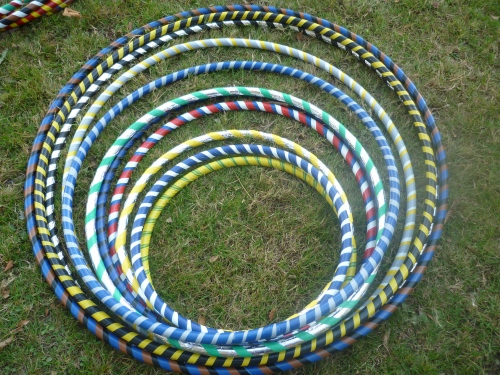
However, the amazing new item is Hula Hoops - which she makes tailor-made for customers. So whether you are a petite child or have a fun maturer figure - Denise can make a hula hoop for you. Apparently, it is not only great exercise - but warms you up. Hula Hoops have been a real hit for Denise at the festivals wherever she gives workshops.
Samamba's new product line in development is the use natural plant dyes for fabrics which she hopes to bring to the market fir the 2012 season. Currently Denise sources her own fabrics and she is now eager to find sources of fully organic cotton. This may mean helping a local farmer in Thailand or Turkey to convert their crops to organic methods.
Apart from catching up, our talk turned to vital business items such as best ways to improve your online presence. I recently modernised my website and Denise is eager to do the same.
When we started, it was all basic HTML coding - now there are excellent content management systems that make it much easier to have a professional looking website which can be updated more easily.
Blogs are also an excellent communication tool and social media such as Twitter and very importantly for business to client companies, Facebook.
If you are interested in ethical fashion accessories from Samamba, have a look at Denise Elliott's site http://www.samamba.co.uk/. Put it in your favourites and check out the new site as it is developed over the coming months.